
What actually happens to your skin while you sleep
Skin loses more water overnight than during the day, and repairs itself at the same time. What the research shows, what is folklore, and what it means for your routine.

"Beauty sleep" sounds like something invented to sell night cream, and part of it was. But the underlying biology is real and more interesting than the marketing version, and it explains something people notice constantly without knowing why: skin is often drier in the morning than it was at bedtime.
Your skin loses more water at night
The one that surprises people. Transepidermal water loss, the rate at which water evaporates through the skin surface, follows a daily rhythm and peaks in the evening and overnight. Skin temperature and blood flow to the skin both rise as your core temperature drops for sleep, and water leaves faster as a result.
Add a heated bedroom in a Melbourne winter, where indoor air can be very dry, and you have seven or eight hours of steady moisture loss with nothing being replaced.
This is the single most practical fact in this article. It is not that night products are magic. It is that night is when the losing happens, so it is when a seal is worth most. The same reasoning we applied to winter skin applies every night of the year, just less dramatically in summer.
Repair runs on a schedule too
Skin cell proliferation, the making of new cells in the lower layers, runs highest overnight and lowest in the afternoon. Growth hormone is released in pulses during deep slow-wave sleep, which happens mostly in the first half of the night. Cortisol, which works against repair, sits at its daily low around midnight and climbs steeply before you wake.
So the overnight hours genuinely are when the building work happens. Not because of a mystical window, but because that is when the hormonal conditions favour it.
What is folklore: the claim that skin only repairs between 10pm and 2am. The rhythm tracks your own sleep and circadian timing, not the clock on the wall. A shift worker sleeping during the day gets the sleep-linked part of it while asleep. Being in bed by ten is good advice for other reasons.
What happens when you do not sleep
Research on sleep restriction and skin is not enormous, but what exists points the same direction consistently. Poorer sleep quality has been associated with slower barrier recovery after it has been disrupted, more visible signs of ageing, and lower self-rated skin appearance.
Under-eye shadowing after a bad night is partly fluid, partly dilated blood vessels visible through thin skin, and partly that everything looks worse when you are tired. Some of it is real and some of it is perception, which is not much comfort at 7am either way.
Long term, chronically poor sleep raises cortisol, and sustained cortisol works against collagen. This is a slow effect, measured in years rather than nights. One bad week does not age you.
Sleep lines are a real thing
The creases you wake up with are compression, not expression. If you sleep on your side or your front, the same folds get pressed into your face for hours every night, and over decades those can become permanent in a way that is quite distinct from expression lines.
There is no product for this. Back-sleeping helps, if you can manage it, which many people cannot. A silk or satin pillowcase reduces friction and drag, which is a modest but genuine improvement, and it is kinder to hair as well.
What this means for your routine
Three things follow from all of the above, and only three.
- Seal at night. Because the loss is happening then. The last step of an evening routine matters more than the last step of a morning one.
- Do not go to bed with the barrier stripped. Cleansing hard at night and applying nothing is the worst possible combination, because you have removed the surface lipids right before the hours of highest water loss.
- Deal with the room, not just the face. Dry heated air undoes a good routine. Lower the heating, or add humidity, or both.
Where a balm comes in
The seal is the whole reason Universal Balm is built the way it is. It is waterless, so there is nothing in it to evaporate, and the Manuka beeswax and cocoa seed butter form a layer that slows water leaving while the shea, sunflower and apricot kernel oils soften underneath. Warm a small amount between your fingers and press it on last, over everything else. On very dry nights, that is the technique we wrote about in slugging without petroleum jelly. It contains beeswax, so it is not vegan.
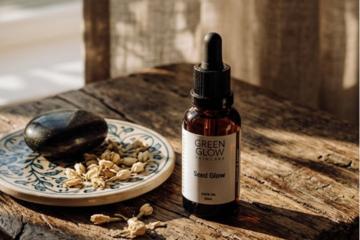
Under it, Seed Glow Face Oil is the softening step, cold-pressed botanical oils that give the barrier lipids to work with. It contains macadamia and sweet almond oil, so avoid it with a tree-nut allergy. The two are sold together as The Ritual Duo because at night they do two halves of one job.
What this will not do
No night product replaces sleep. If you are sleeping five hours, the most effective skincare intervention available to you is not on a shelf.
Sealing the barrier also will not treat a skin condition. Eczema, dermatitis and persistent inflammation are medical, and night-time itching in particular is worth mentioning to a GP, because it has a habit of being a symptom of something specific.
And nothing here reverses sun damage, which remains the largest single contributor to how skin ages.
Common questions
Is there really a 10pm to 2am repair window?
No. The rhythm follows your sleep and body clock, not the wall clock.
Why is my skin drier in the morning?
Water loss through the skin peaks overnight, and heated indoor air makes it worse. A seal before bed is the fix.
Do silk pillowcases help?
For friction and sleep creases, modestly yes. For hydration, no.
Should I use my actives at night?
Generally yes, retinoids especially, since they degrade in light. Introduce one at a time, and if your skin is already reactive, read sensitive or sensitised first.
Continue reading
- How to build a night routine that works while you are asleep
- Slugging, without the petroleum jelly
- Does what you eat actually show up on your skin?
Built on the ideas in this post.
Ingredient transparency, handmade in Melbourne. The same care that goes into how we write goes into how we formulate.
Shop Universal Balm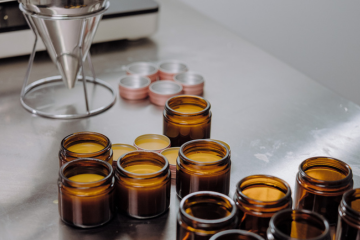
Why I formulate our products
Is Natural better than Synthetic ingredients
Why face oil all year round
Join the community
Slow beauty, in your inbox
Ritual guides, ingredient stories and 15% off your first order, for those who believe the best skincare comes from nature.
We respect your privacy. Unsubscribe at any time.

Let nature show its magic to you. Naturally derived skincare rooted in Ayurveda, handmade in small batches in Melbourne for sensitive, dry and ageing skin.