
Why I formulate our products
It is one of the most common claims in indie beauty and one of the least defined. What the phrase usually covers, what it should mean, and the questions that tell them apart.

What it usually means
There is a whole industry that exists to make this claim easy to make, and there is nothing shady about most of it. Contract manufacturers and private label houses are legitimate businesses doing skilled work. But the arrangements vary enormously, and the phrase does not distinguish between them.
At one end: white label. A manufacturer has an existing formula. A brand picks it from a catalogue, chooses a fragrance and a bottle, and puts a name on it. The founder may have chosen thoughtfully. They did not formulate anything.
In the middle: private label with tweaks. A base formula adjusted to a brief. Swap an oil, adjust a texture, change the scent. The founder has genuinely shaped the product without having made it.
Further along: a real brief to a real chemist. The founder specifies what it must do, what it must not contain, how it should feel, and works through iterations with a cosmetic chemist who does the actual formulation. This is how most good products in the world are made, and there is nothing to apologise for in it.
At the far end: the founder does the formulation. Sourcing, ratios, trials, failures, the lot.
All four of those routinely get described as "formulated by the founder". Only the last one is what the phrase implies.
The questions that tell them apart
You do not need to be rude about it. Four questions do most of the work, and it is the specificity of the answer that matters rather than the answer itself.
"Why is that ingredient at the percentage it is?"
Someone who formulated it will tell you what it does at that level and what happened when they went higher or lower. Someone who did not will talk about the ingredient in general terms. This is also the fastest way to spot a formula where a nice-sounding ingredient is present at a fraction of a per cent purely to appear on the label, which I went through in why a higher percentage is not a better product.
"What did you try that did not work?"
Real formulation is mostly failure. A person who has done it has a list. A person who has not will usually pivot to talking about how carefully they selected the ingredients.
"Where is it made, and by whom?"
Not a gotcha. Contract manufacturing is normal and often the more rigorous option. But the answer should be immediate.
"What is in it that you would rather not have to include?"
Every formula involves a compromise. Anyone who cannot name one is either not being straight with you or was not in the room.
Where I sit, precisely
Since I am setting the test, I should sit it.
I formulated both products. Seed Glow took two years and fifteen trial formulations before I sold a bottle. The Universal Balm is eight ingredients I chose and a process I run. Both are made by us, by hand, in micro-batches, in Melbourne.
And here is the part that belongs in the same paragraph.
I do not have a laboratory. I do not run microbiology testing, because my formulas are waterless and do not require it. I work in the most forgiving format in cosmetics, which is a real limitation on what I am qualified to claim, not just a stylistic choice.
That is the same point I made about small batch, and it is worth repeating because the incentive to leave it out is enormous.
Why I still think it matters
Not because founder-made is better. It often is not.
It matters because of what it changes about accountability. When I chose every ingredient, I cannot tell you a supplier made a decision I did not know about. When something is wrong with a jar, it came from us and I will know which run. And when someone emails to say a product did not suit them, that reaches the person who decided what went in it.
That is not a quality control system. It is a shorter distance between the decision and the consequence, which is a different thing and a smaller claim.
Common questions
Is contract manufacturing a bad sign?
No. It is often the more rigorous option, particularly for anything containing water. What matters is whether a brand is straightforward about it.
How can I check any of this?
Mostly you cannot verify it independently, which is the uncomfortable truth. What you can do is ask specific questions and notice whether the answers are specific back. Vagueness is the signal.
Does "made in Australia" mean formulated in Australia?
Not necessarily. Country-of-origin claims have their own rules and they are about manufacture and cost, not about who designed the formula.
Continue reading
- What "small batch" and "handmade" actually mean
- "Clinically proven" and other things the front of the box is allowed to say
- Where our ingredients come from
Built on the ideas in this post.
Ingredient transparency, handmade in Melbourne. The same care that goes into how we write goes into how we formulate.
Shop Seed Glow Face Oil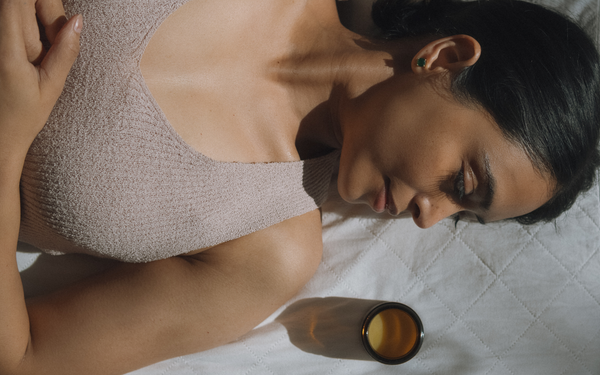
Is Natural better than Synthetic ingredients
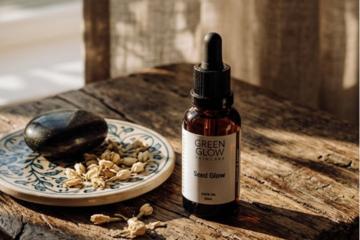
Why face oil all year round
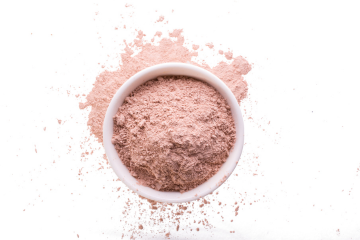
Ubtan, the original cleanser.
Join the community
Slow beauty, in your inbox
Ritual guides, ingredient stories and 15% off your first order, for those who believe the best skincare comes from nature.
We respect your privacy. Unsubscribe at any time.

Let nature show its magic to you. Naturally derived skincare rooted in Ayurveda, handmade in small batches in Melbourne for sensitive, dry and ageing skin.