
Is Natural better than Synthetic ingredients
Worry is not free. When every ingredient list feels like a test, even a two-minute ritual starts to feel like something you can fail. You second-guess products that were working for you, and feel guilty about the ones you keep. Fear can also steer you away from things that protect you. In anything that contains water, a preservative is what stops bacteria and mould growing in the jar. Leave it out and the product gets riskier, whatever the label says.

I make natural skincare, and I will not tell you synthetic ingredients are toxic. As a group, they are not. I have also come to think the fear around them does more damage to your routine, and to your peace of mind, than most of the ingredients it warns you about.
I know that aisle
My skin reacts to essential oils, so reading ingredient lists was never optional for me. You check the front for "100% natural", then start worrying about the back. Is this natural or not? Is that preservative the one someone online called dangerous?
The messages sound certain. Synthetic ingredients are toxic. Natural is always better. If you have ever read a label with a knot in your stomach, you are not alone.
Everything in a bottle has been processed
Natural does not mean untouched. You cannot rub an orange on your face and call it a vitamin C serum. Turning a plant into something stable and safe to put on skin takes processing.
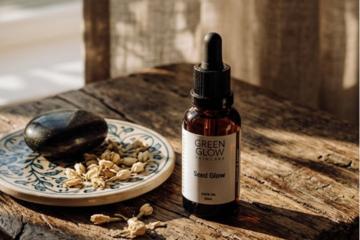
My own face oil is a good example. Most of Seed Glow is cold-pressed oil, which is about as gentle as processing gets. Its olive squalane comes from olive oil and goes through a hydrogenation step to keep it stable. The useful distinction is where an ingredient started, in a plant, or in a lab.
Origin tells you less than you would think
Take vitamin C. Most of the vitamin C in serums and supplements never comes near a piece of fruit. Manufacturers make it from glucose, using fermentation and a few chemical steps. The result is L-ascorbic acid, the same molecule as the vitamin C in an orange, and your skin cannot tell the two apart.
Lab-made ingredients are often more stable and more consistent from batch to batch. Natural ones bring a complexity that many people love, me included. Both belong in skincare, and natural vs synthetic skincare covers where each one does better.
What the fear costs you
Worry is not free. When every ingredient list feels like a test, even a two-minute ritual starts to feel like something you can fail. You second-guess products that were working for you, and feel guilty about the ones you keep.
Fear can also steer you away from things that protect you. In anything that contains water, a preservative is what stops bacteria and mould growing in the jar. Leave it out and the product gets riskier, whatever the label says.
A reason is different from a fear
I do leave things out. Seed Glow and the Universal Balm have no essential oils, no fragrance of any kind and no preservative.
Each of those has a reason. My skin reacts to essential oils, and I formulate for people whose skin behaves like mine. I told that story in why there are no essential oils in anything I make. Both products are waterless, so there is nothing for a preservative to protect. That is a consequence of the format, and it says nothing about whether preservatives are safe.
A reason is specific. It applies to some skin and not to others, and you can check it. A fear is general, applies to everyone, and usually has someone selling something behind it. In today's world fear sells natural skincare, and it would sell mine. I would still rather you bought nothing from me than bought something because you were frightened into it.
Choose, then let it go
- Learn how the ingredients you care about work. Reading an ingredient list takes about sixty seconds once you know the order.
- Choose what suits your skin and your values. Lab-made, natural or a mix of the two are all reasonable.
- Then own it. An influencer or a clever campaign does not get a vote in your bathroom.
Other people's opinions of your routine count for very little, mine included. The only test that matters is whether you understand your choices and feel at ease with them. Drop the guilt, and make peace with your skincare.
What this does not mean
Letting go of the fear does not mean ignoring your skin. If a product stings or brings you out in a rash, stop using it, whether it came from a plant or a lab. Ongoing redness, eczema, rosacea or persistent breakouts need a GP or dermatologist rather than a different jar.
Common questions
Are synthetic ingredients bad for your skin?
Not as a group. Judge each ingredient on what it does and how your skin takes it. Ten ingredient names that sound alarming, and what they actually do.
What does clean beauty actually mean?
Nothing fixed. It is a retail category rather than a regulated standard, so every brand draws its own line. What the front of the box is allowed to say.
Is natural skincare safer?
Not automatically. Some of the most common contact allergens in cosmetics come from plants, which is why there are no essential oils in my formulas.
How do I know if a new product suits my skin?
Try it on a small patch first. How to patch test a new product properly.
If you have been curious about natural skincare but thought you would need to overhaul your routine to try it, you do not. The Sample Set has 5ml of Seed Glow and 5g of the Universal Balm. Use them alongside what you already love, and see how your skin feels after a couple of weeks.
Continue reading
- Natural vs synthetic skincare: what the words mean on a label
- "Clinically proven" and other things the front of the box is allowed to say
- Why there are no essential oils in anything I make
Built on the ideas in this post.
Ingredient transparency, handmade in Melbourne. The same care that goes into how we write goes into how we formulate.
Shop Seed Glow Face Oil
Why I formulate our products
Why face oil all year round
Ubtan, the original cleanser.
Join the community
Slow beauty, in your inbox
Ritual guides, ingredient stories and 15% off your first order, for those who believe the best skincare comes from nature.
We respect your privacy. Unsubscribe at any time.

Let nature show its magic to you. Naturally derived skincare rooted in Ayurveda, handmade in small batches in Melbourne for sensitive, dry and ageing skin.