
Natural vs synthetic skincare: what the words mean on a label
Natural is not a regulated word, and synthetic is not a warning. What each term actually allows, where natural genuinely wins, and where it does not.

We make natural skincare, so we have every reason to tell you natural is better across the board. We would rather be more useful than that. "Natural" is not a regulated term in Australia, which means it promises nothing on its own, and there are places where a synthetic ingredient is the better choice. Here is the honest version.
The words, and what they actually allow
| Term | What it means | What it does not mean |
|---|---|---|
| Natural | Nothing legally defined. Usually: derived from a plant, mineral or animal source | Unprocessed, safe, gentle, or free of anything in particular |
| Naturally derived | Started as a natural material, then processed, sometimes heavily | Chemically unchanged from the plant |
| Organic | The farming method. Meaningful when certified, and the certifier is named | That the whole product is organic. A formula can be 1% organic and say "made with organic ingredients" |
| Clean | A marketing category. No legal definition anywhere | Any tested safety standard |
| Synthetic | Made in a lab rather than extracted | Harmful, cheap, or lower quality |
| Chemical-free | Not a real thing. Water is a chemical | Anything at all |
The pattern is that almost none of these are enforceable. They describe intent, positioning and sourcing philosophy. The ingredient list is the only part of the packaging that has to be true, which is why we wrote a separate guide to reading one.
Where natural genuinely wins
Whole plant oils carry more than one thing. A cold-pressed seed oil brings fatty acids, vitamin E, sterols and polyphenols together, in the proportions the plant made them. An isolated fatty acid gives you the fatty acid. For barrier repair, where the skin is essentially looking for lipids to rebuild with, that complexity is genuinely useful. More on that in why cold-press matters.
Fewer ingredients means fewer variables. A formula with eight ingredients is easier to troubleshoot than one with forty. If you react, you can find the culprit.
Waterless formulas need no preservative system. Water is what microbes need. Take it out and the preservative question mostly disappears, which removes one of the more common irritant categories.
Sourcing and processing are traceable. You can find out where a shea butter came from and how it was extracted. That is much harder with a synthetic ester made four steps back in a supply chain.
Where natural does not win
Sun protection. Do not use a plant oil as sunscreen. Not raspberry seed, not carrot, not coconut. The SPF values circulated for these online are not tested standards and the practice is genuinely risky. Use an approved, tested sunscreen, and it will contain synthetic filters or mineral ones and that is entirely fine.
Consistency. Plant materials vary by harvest, region and season. A synthetic is identical every time. For skincare that is usually acceptable and occasionally a nuisance.
Allergy risk. Botanicals are one of the more common sources of contact allergy in cosmetics, because a plant extract is a mixture of hundreds of compounds and any of them can be the problem. Essential oils in particular. Natural does not mean hypoallergenic, and we go into that in fragrance-free vs unscented.
Some jobs only a synthetic does well. Squalane is the clean example. It can be derived from olives or made synthetically, and the synthetic version is molecularly identical, more stable and often more sustainable. Preferring the plant version is a values choice, not a performance one.
What we actually claim, and what we do not
Being specific is more useful than being flattering, so:
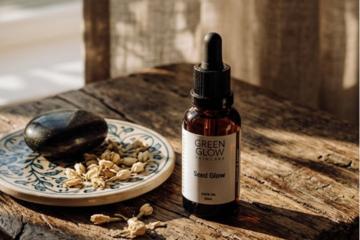
Seed Glow Face Oil is cold-pressed botanical oils with saffron, Q10, vitamin E and rosemary. It is vegan, and the squalane comes from olives. It contains macadamia and sweet almond oil, so it is not suitable with a tree-nut allergy.
Universal Balm is eight ingredients. The shea butter, cocoa seed butter, sunflower and apricot kernel oils are unrefined and certified organic. It contains Manuka beeswax, which is animal-derived, so the balm is not vegan. We used to describe the whole range as plant-based and that stopped being true when the balm launched, so we changed it.
Two other things we do not say. We do not claim cold-pressed across the range: that is confirmed for the Seed Glow oils and we have not confirmed it for the balm's, so we say unrefined instead. And we do not say chemical-free, because nothing is.
None of that makes our products better than a well-made synthetic formula. It makes them a particular kind of product, suited to people who want short ingredient lists they can pronounce and trace.
What this will not do
Choosing natural will not stop you reacting to things, will not treat a skin condition, and will not substitute for medical care. Eczema, rosacea, persistent acne and dermatitis are medical, and the right first step is a GP or dermatologist rather than a different jar.
Common questions
Is natural skincare better for sensitive skin?
Sometimes. Short, fragrance-free ingredient lists suit reactive skin well, and those are common in natural ranges. But botanical extracts and essential oils are frequent triggers, so the category is not automatically safer.
Does organic certification mean the whole product is organic?
No. Check whether the claim is about the product or about individual ingredients, and look for a named certifier.
Is "clean beauty" a real standard?
No. It is a retail category, defined differently by every retailer that uses it.
Should I avoid all synthetics?
There is no good reason to. Pick on formulation quality and on what your skin tolerates, not on where a molecule was assembled.
Continue reading
- How to read an ingredient list in sixty seconds
- The myth of chemical-free natural skincare
- Why cold-press matters
Built on the ideas in this post.
Ingredient transparency, handmade in Melbourne. The same care that goes into how we write goes into how we formulate.
Shop Seed Glow Face Oil
Why I formulate our products
Is Natural better than Synthetic ingredients
Why face oil all year round
Join the community
Slow beauty, in your inbox
Ritual guides, ingredient stories and 15% off your first order, for those who believe the best skincare comes from nature.
We respect your privacy. Unsubscribe at any time.

Let nature show its magic to you. Naturally derived skincare rooted in Ayurveda, handmade in small batches in Melbourne for sensitive, dry and ageing skin.