
Why Cold-Press Matters
The same "rosehip oil" can cost $8 or $80 — and at a molecular level, be almost entirely different. The reason is extraction. Here's what cold-pressing preserves, what refining strips away, and why it matters for your skin barrier.

Cold-pressed, refined, solvent-extracted - the extraction method changes the chemistry of a plant oil entirely. Here's why it matters to your skin barrier, and why we don't compromise on it.
A bottle of rosehip oil can cost $8 or $80. Both can truthfully call themselves "rosehip oil." But what's inside those two bottles, at a molecular level, may be almost entirely different. The difference comes down to extraction.
What happens when you cold-press a seed
Cold-pressing is a mechanical process. Seeds are cleaned, dried to an appropriate moisture level, and passed through a hydraulic or screw press that crushes and squeezes the oil out without applying external heat. The oil is then filtered and bottled. No solvents. No chemical intervention.
The result is an oil that retains its full complement of bioactives: tocopherols (naturally occurring vitamin E), phytosterols, carotenoids, and the specific fatty acid profile that makes each seed oil distinct. These compounds are heat- and solvent-sensitive, they don't survive refining intact.
A refined seed oil is structurally an oil. A cold-pressed seed oil is structurally an oil plus its entire botanical complexity.
Linoleic acid (Omega-6) is an essential fatty acid and a structural component of ceramides in the human skin barrier. It can't be synthesised by the body and must be obtained externally, topically or through diet. Research has linked linoleic acid deficiency in the skin to increased transepidermal water loss and to inflammatory barrier conditions including atopic dermatitis.
Where cold-pressing makes the most meaningful difference isn't the fatty acid backbone itself, it's the surrounding bioactive complex. Cold-pressed oils generally exceed refined oils in nutritional value, retaining more beneficial compounds including tocopherols, sterols, carotenoids and phospholipids, which are partially removed during refining. (PubMed)
The research is specific about which refining stages cause the most loss. The loss of antioxidant capacity during neutralisation alone ranges from 46–52%, followed by bleaching at 19–31%, with the reduction attributed to the removal of phytosterols, tocopherols, polyphenols and carotenoids. (Experimental Dermatology)
Tocopherol and sterol losses during refining vary from 10–75% depending on the oil type and process, resulting in a measurable decrease in oxidative stability.
Cold-pressing involves no heat, no chemical treatment and no refining, which preserves a high level of bioactive phytochemicals that would otherwise be reduced or removed.
The four-stage refining process
Most commercial plant oils used in skincare, even those marketed as "natural", have been refined. The standard refining process has four stages, each one removing something.
Degumming: Phospholipids and proteins are removed using hot water or acid treatment. These include lecithins, which have genuine skin-barrier affinity. They're stripped because they affect appearance and shelf stability, not because they're harmful.
Neutralisation: Free fatty acids are removed with sodium hydroxide (caustic soda). Free fatty acids contribute to each oil's unique profile, in rosehip, for instance, they include the linoleic acid fraction responsible for most of its studied skin effects.
Bleaching: Activated clay removes colour compounds, primarily carotenoids and chlorophyll. Carotenoids are potent antioxidants, removed because consumers have historically preferred colourless oils. Sea buckthorn refined to colourlessness is sea buckthorn without its most compelling compound.
Deodorisation: High-temperature steam stripping removes volatile compounds, including much of the remaining tocopherol fraction. The result is a stable, pale, odourless oil that performs consistently batch to batch, and has very little of the bioactive content that made the original plant worth using.
Why we built Seed Glow as a blend, not a single oil
No individual seed provides the full complement of fatty acids, antioxidants and phytonutrients that support the range of things we ask skin to do. Rosehip is exceptional for its retinoid precursors and linoleic content, but it's one note, not the whole chord.
Every oil in the Seed Glow blend is sourced with Certificate of Analysis documentation for each batch: fatty acid profile, peroxide value, free fatty acid content and tocopherol levels. These numbers tell us whether the oil we received is genuinely cold-pressed, or whether it's been blended with a refined fraction, a practice more common in the supply chain than most consumers would be comfortable knowing.
We don't source on price. We source on chemistry. That creates supply challenges and cost pressures we accept as part of the work.
Built on the ideas in this post.
Ingredient transparency, handmade in Melbourne. The same care that goes into how we write goes into how we formulate.
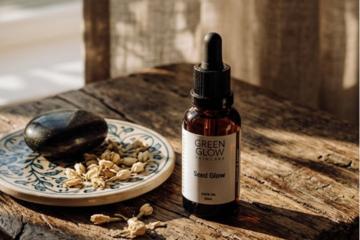
Shop Seed Glow Face Oil
Why I formulate our products

Is Natural better than Synthetic ingredients
Why face oil all year round
Join the community
Slow beauty, in your inbox
Ritual guides, ingredient stories and 15% off your first order, for those who believe the best skincare comes from nature.
We respect your privacy. Unsubscribe at any time.

Let nature show its magic to you. Naturally derived skincare rooted in Ayurveda, handmade in small batches in Melbourne for sensitive, dry and ageing skin.