
Occlusive, emollient, humectant: which one your dry skin actually needs
The three ways a product can treat dry skin, what each one actually does, how to tell which your skin is missing, and the order to layer them in.

Almost every moisturiser on the shelf is doing one of three jobs, or some combination of them. Nobody tells you which, so you buy on texture and hope. This is the whole vocabulary, in one place, and it is genuinely useful because dry skin that is not improving is usually being given the wrong one of the three.
The three jobs, in plain terms
| What it does | How it feels | Typical ingredients | |
|---|---|---|---|
| Humectant | Draws water into the upper layers of skin, from your deeper skin and from the air | Light, watery, absorbs fast | Glycerin, hyaluronic acid, honey, aloe |
| Emollient | Fills the gaps between skin cells so the surface feels smooth and flexible | Silky, cushioned, sinks in | Plant oils, squalane, shea butter, fatty acids |
| Occlusive | Forms a layer on the surface that slows water evaporating out | Rich, sits on top, protective | Beeswax, cocoa butter, plant waxes, petrolatum |
A humectant brings water. An emollient softens. An occlusive keeps what you have. They are not competing, and the best routines use all three. But when skin is unhappy, one of them is usually missing, and identifying which saves you a lot of money.
How to tell which one you are short of
Your skin drinks products and is tight again within the hour.
You are probably short on occlusive. Water is going in and straight back out. Humectants without a seal over the top can even make this worse in dry air, because a humectant with no water available to it will pull moisture from wherever it can find it. Adding a seal at the end of the routine is the fix, and it is usually a dramatic one.
Your skin feels rough and looks dull, but not especially tight.
That is an emollient shortfall. The surface has gaps in it. Oils and butters fill those gaps physically, which is why skin looks smoother within minutes of applying them rather than days.
Your skin is flaky, dull, and fine lines look deeper than usual, but it still gets oily.
That is dehydration, not dryness, and the two get confused constantly. Dry skin lacks oil. Dehydrated skin lacks water, and oily skin can absolutely be dehydrated. Here you want humectants first, then a light seal, and you do not need heavy butters.
Everything stings, including things that never used to.
That is a barrier problem rather than a moisture problem, and the answer is to strip the routine right back: gentle cleanser, one hydrating step, one sealing step, and pause your actives until it settles.
The order matters, and it only goes one way
Thinnest to thickest, water before oil, and the occlusive always last.
- Humectant onto slightly damp skin. Damp skin gives the humectant something to pull on. This is the single most common mistake, applying hyaluronic acid to a bone dry face in a heated room.
- Emollient. A face oil or a lotion. This smooths and adds the lipids.
- Occlusive. A balm, last, over everything.
You cannot put a balm on first and then expect a serum to get through it. That is the entire reason for the order. An occlusive works precisely because things do not pass through it easily.
You do not need all three at every step of every day. Most people need one or two in the morning and all three at night in winter.
Where a balm fits
A good balm is mostly occlusive with a strong emollient component, which is a genuinely useful combination because it covers two of the three jobs in one step.
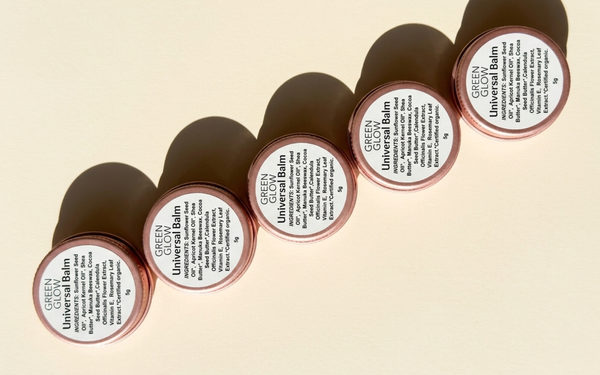
Our Universal Balm is built on that principle. The manuka beeswax and cocoa seed butter do the sealing. The organic shea butter, sunflower and apricot kernel oils do the softening, and they carry vitamin E and calendula with them. It is waterless, which means there is no water in the formula to evaporate and nothing to preserve against, so what you are applying is entirely active material. A very small amount goes a long way, and warming it between your fingers first makes it spread far more thinly than scooping it on cold.
What it is not is a humectant. It does not bring water to your skin, and no balm does. That is what the step before it is for. If your skin is dehydrated rather than dry, a balm on its own will feel nice and change very little, and you should reach for a hydrating serum first and then seal it.
The short version
- Water in, softness through, seal on top.
- Tight within an hour means you need a seal.
- Rough and dull means you need oils.
- Flaky but oily means you need water, not butter.
- If it all stings, simplify and pause your actives.
Continue reading
- Slugging, without the petroleum jelly
- Balm, oil or moisturiser: what to use, and when
- Why skin cracks in winter, and what actually stops it
Built on the ideas in this post.
Ingredient transparency, handmade in Melbourne. The same care that goes into how we write goes into how we formulate.
Shop Universal Balm →
Kapha season
Waterless, and what that choice costs
Abhyanga: what oiling your own skin actually does
Join the community
Slow beauty, in your inbox
Ritual guides, ingredient stories and 15% off your first order, for those who believe the best skincare comes from nature.
We respect your privacy. Unsubscribe at any time.

Let nature show its magic to you. Naturally derived skincare rooted in Ayurveda, handmade in small batches in Melbourne for sensitive, dry and ageing skin.