
Why skin cracks in winter, and what actually stops it
Cold air, heating and hot showers strip skin from three directions at once. What winter actually does to your barrier, and the five changes that fix it.

Every year, somewhere around the middle of winter, skin that behaved perfectly well in March starts to feel like it belongs to someone else. Tight after washing. Flaking at the sides of the nose. A patch on one cheek that will not settle. It is not your imagination and it is not your skin turning on you. Winter attacks the same layer from three directions at once.
What cold air actually does
Cold air holds much less water than warm air. When you walk outside on a cold morning, the air around your face is dry in absolute terms, and water moves from wherever there is more of it to wherever there is less. Your skin has more. So it leaves.
Wind speeds this up considerably by constantly replacing the thin layer of slightly humid air sitting against your skin with fresh dry air. That is what windburn is. Not a burn, and not really cold damage, but accelerated evaporation combined with physical irritation from the wind itself.
Then you go inside, and it gets worse
Heating warms air without adding any water to it, which drops the relative humidity of a heated room dramatically. A well heated living room in July can be drier than the air outside. So you go from a cold dry outside to a warm dry inside, and both are pulling water out of your skin the entire time.
The temperature swing itself does not help either. Skin responds to rapid warming and cooling with flushing, and repeated flushing on already compromised skin is what turns general dryness into visible redness across the cheeks and nose.
And then you have a hot shower
This is the one nobody wants to hear. Hot water dissolves the lipids that hold your skin barrier together far more efficiently than warm water does, and a long hot shower on a cold morning strips a great deal of them. You step out, the water on your skin evaporates fast in a cool bathroom, and you are drier than when you got in.
That tight, squeaky feeling after a shower is not cleanliness. It is a barrier that has just been degreased.
The five changes that actually make a difference
None of these require buying much. Two of them cost nothing.
1. Turn the shower temperature down and make it shorter. Warm, not hot. Ten minutes rather than twenty. This is the highest impact change on the list and it is free.
2. Moisturise while you are still damp. Within a minute of getting out, before the water on your skin has evaporated. You are trapping water that is already there rather than trying to add it back later. The difference is genuinely noticeable within a few days.
3. Add a sealing step at night. This is the piece most routines are missing in winter. Whatever your normal routine is, put an occlusive layer over the top of it before bed. It does not replace anything, it goes on last, and it holds everything else in place for eight hours while nothing is interfering.
4. Cut back your actives temporarily. Retinoids, AHAs, BHAs and vitamin C all ask something of the skin, and winter has already reduced what your skin can give. If things are stinging, go to alternate nights or pause for a fortnight. It will not undo your progress.
5. Protect the face before you go out. A balm across the cheeks, nose and lips before a cold or windy walk works the same way a windbreaker does. It is a physical barrier between skin and moving air.
Where the balm goes
Two places, and they are different jobs.
At night, as the final step. Over your serum or oil, pressed rather than rubbed, on the areas that flake. This is the repair step.
Before going outside. A thin layer on the exposed parts, particularly lips, nose and cheekbones. This is the protection step, and it is the one people forget.
Our Universal Balm is designed for both. It is waterless and concentrated, so there is no water in it to freeze, evaporate or dilute the effect, and a small amount warmed between the fingers covers the whole face. Organic shea and cocoa seed butters and manuka beeswax do the sealing, while sunflower and apricot kernel oils, calendula and vitamin E soften the surface. There is no added fragrance, which matters when you are applying something to skin that is already irritated.
It is made in small batches here in Melbourne, which means we are formulating for the winter we actually get: not especially cold, but wet, windy, and lived through in heated rooms.
It contains beeswax, so it is not vegan.
When it is not just winter
If a patch is intensely itchy, weeping, spreading, or does not respond at all to a fortnight of gentler routine and consistent sealing, that is worth having looked at. Eczema, dermatitis and fungal conditions all look like winter dryness at first glance and none of them are solved by moisturiser alone. A balm supports skin. It does not diagnose it.
Common questions
Why is my skin dry in winter even though I moisturise?
Almost always because there is no sealing step. A moisturiser that is mostly water will evaporate in a heated room. Adding an occlusive layer last is the fix.
Is windburn the same as sunburn?
No. Sunburn is UV damage. Windburn is accelerated water loss plus physical irritation. You can get both at once on a bright, cold, windy day, which is why sunscreen still matters in winter.
Should I change my whole routine for winter?
No. Add a sealing step, moisturise on damp skin, lower the shower temperature, and ease off actives if things sting. That is usually enough.
Continue reading
- How to fix cracked hands and split cuticles
- Slugging, without the petroleum jelly
- Occlusive, emollient, humectant: which one your dry skin actually needs
Built on the ideas in this post.
Ingredient transparency, handmade in Melbourne. The same care that goes into how we write goes into how we formulate.
Shop Universal Balm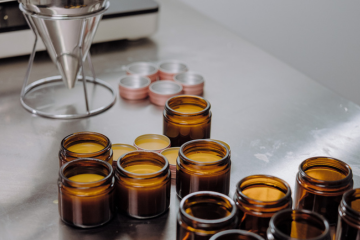
Why I formulate our products
Is Natural better than Synthetic ingredients
Why face oil all year round
Join the community
Slow beauty, in your inbox
Ritual guides, ingredient stories and 15% off your first order, for those who believe the best skincare comes from nature.
We respect your privacy. Unsubscribe at any time.

Let nature show its magic to you. Naturally derived skincare rooted in Ayurveda, handmade in small batches in Melbourne for sensitive, dry and ageing skin.