
Kapha season
Almost every Ayurvedic seasonal guide you will read online is written for the northern hemisphere, which makes it six months wrong for us. What spring actually asks of your skin.

Almost every Ayurvedic seasonal guide you will find online is written for the northern hemisphere. Which makes it, for us, exactly six months wrong.
Search for Ayurvedic advice in September and you will be told to prepare for autumn, guard against Vata, eat warming food and oil yourself heavily. That is sound guidance for someone in London. In Melbourne, September is spring, and spring in Ayurveda is a different season with different instructions.
So this is the seasonal piece written for where we actually live.
Ritucharya, briefly
Ritucharya is the seasonal counterpart to dinacharya. Where the daily routine works with the rhythm of a day, this one works with the rhythm of a year.
The classical system divides the year into six seasons rather than four, mapped to the Indian subcontinent. Translating that directly to a Melbourne calendar is a stretch, and I would rather not pretend it maps cleanly. What does travel is the underlying logic: each season accumulates a particular quality, and the sensible response is to do less of what the season is already doing to you.
Spring is the Kapha window
Kapha is the heavy, cool, moist, slow quality. Ayurveda holds that it builds up through the cold months and then, as the weather warms, begins to liquefy and move. That is why spring in the tradition is associated with congestion, heaviness, sluggish mornings and a general sense of being clogged.
You do not have to take the humoral framework literally to notice that the description fits. A Melbourne spring is damp, unstable and full of things in the air, and most people do feel heavier in September than the sunshine suggests they should.
The instruction that follows is consistent: lighten. Less heaviness in food, more movement, and, for our purposes, less weight on the skin.
What Melbourne spring actually does to skin
Three things, and only one of them is what people expect.
The temperature swings, hard. Fourteen degrees and windy in the morning, twenty-four by three, back to twelve at night. Skin that spent August adapting to cold, dry, heated indoor air is now being asked to cope with something different every few hours. Instability is more demanding on a barrier than cold is.
The wind does not stop. Spring wind is the underrated one. It strips moisture from the surface faster than still cold air does, which is part of why skin can feel tight on a mild day. I went through the mechanics of that in why skin cracks in winter, and most of it still applies.
And the humidity comes back, slightly. Not much, but enough that the heavy routine that carried you through winter can start to feel like too much. This is where the Kapha instruction and the practical reality land in the same place.
What to actually change
Less than you would think, and in one direction: lighter, not weaker.
Keep the barrier work. Reduce the weight. If you have been finishing every night with a thick occlusive layer, this is the month to see whether you still need it everywhere, or only on the parts that genuinely crack. Hands and cuticles usually still want it. A whole face often does not.
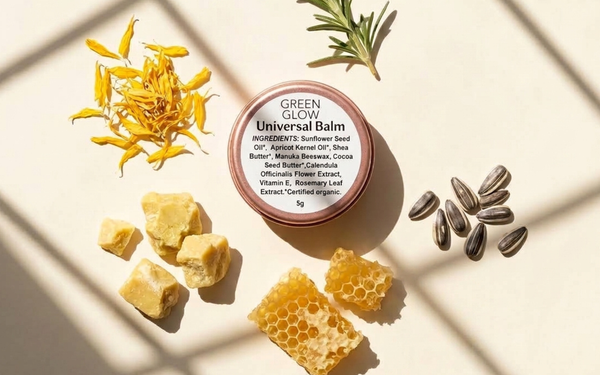
Move the balm to spot use. The Universal Balm earns its place in August across everything. By September it is better kept for hands, cuticles, elbows and the odd dry patch, with the face going back to oil alone.
Apply to damp skin, still. This does not change with the season. It is the single highest-value habit in the whole routine.
Do not start stripping. Spring is when people reach for exfoliation because their skin feels congested, and it is the fastest way to turn winter-tired skin into sensitised skin. If your barrier has had a hard winter, the answer is not to sand it.
Garshana, if you want the traditional version. Dry brushing with raw silk or linen gloves, before bathing, working towards the heart. It is the classical Kapha-season counterpart to abhyanga, done dry and briskly rather than slowly and with oil. Gentle. It should feel stimulating, never scratchy.
What this is not
Ayurvedic seasonal guidance is a framework for adjusting habits. It is not a diagnosis and it is not a treatment plan.
If spring reliably brings you itching, streaming eyes or a rash, that is worth a conversation with a GP rather than a change of face oil. Seasonal allergy is a medical matter and nothing on my shelf addresses it.
And a lighter routine will not resolve congestion that has another cause. Persistent breakouts, dermatitis and eczema belong with a professional.
Common questions
Should I switch products entirely for spring?
Almost never. Adjust quantity and frequency before you adjust the product. Most people need less of the same thing, not something different.
My skin feels congested in spring. Is that Kapha?
In the framework, yes. In practice it is more often heavier winter products still being used at winter frequency into warmer weather. Try reducing before you conclude anything.
Is dry brushing safe for sensitive skin?
Go carefully or skip it. If your skin is reactive, a soft cloth and a light hand, and stop if it leaves you pink for more than a few minutes.
Do I need to eat differently too?
The tradition says lighter, warmer, less dairy and less heavy sweetness in spring. Where the evidence on diet and skin actually stands is a separate and more complicated question, and I went through it in does what you eat show up on your skin.
Continue reading
- Dinacharya: the Ayurvedic daily rhythm
- Why skin cracks in winter, and what actually stops it
- Is your skin actually sensitive, or is it sensitised?
Built on the ideas in this post.
Ingredient transparency, handmade in Melbourne. The same care that goes into how we write goes into how we formulate.
Shop Seed Glow Face Oil →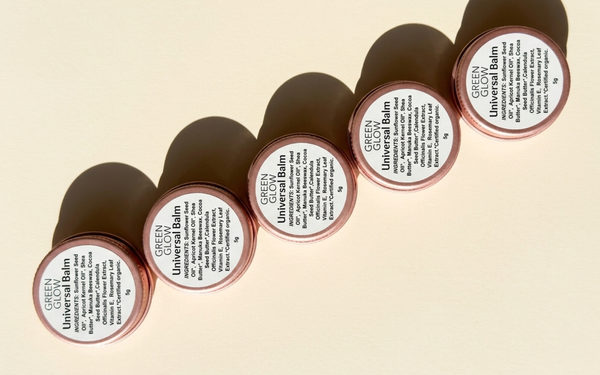
Waterless, and what that choice costs
Abhyanga: what oiling your own skin actually does
Why the Universal Balm is not vegan
Join the community
Slow beauty, in your inbox
Ritual guides, ingredient stories and 15% off your first order, for those who believe the best skincare comes from nature.
We respect your privacy. Unsubscribe at any time.

Let nature show its magic to you. Naturally derived skincare rooted in Ayurveda, handmade in small batches in Melbourne for sensitive, dry and ageing skin.