
Dinacharya: the Ayurvedic daily rhythm, and the three parts worth keeping
The classical Ayurvedic daily routine has a dozen steps and assumes a life without a commute. Here are the three parts that survive a modern week, and what each one is not.

Dinacharya is the Ayurvedic daily routine. Not a routine in the skincare sense. A shape for the whole day: when to wake, when to eat, when to move, when to stop.
It is one of the oldest ideas in the tradition and, I think, one of the most quietly useful. It is also long. The classical version runs to a dozen or more steps and assumes a life without a commute.
So rather than hand you the full list and watch you abandon it by Thursday, here are the three parts that survive contact with a modern week, and an honest note on what each one is not.
What dinacharya actually is
The word comes from din, day, and acharya, conduct. The thinking behind it is that the body is not equally capable of everything at all hours.
Ayurveda divides the day into blocks, each governed by one of the three doshas. Kapha holds the hours after dawn and after dusk, heavy and slow. Pitta holds the middle of the day and the middle of the night, sharp and digestive. Vata holds the late afternoon and the hours before dawn, light and mobile.
Dinacharya is built to work with that rhythm rather than against it. Eat when digestion is strongest. Wake when the mind is clearest. Wind down when the body is already winding down.
You do not have to accept the dosha framework to find the underlying observation useful. The claim is simply that timing matters, and that a body kept to a steady rhythm behaves better than one that is not.
One: a fixed wake time
The classical instruction is to wake during brahma muhurta, roughly the ninety minutes before sunrise, in the Vata window. The reasoning is that the mind is at its least cluttered then.
The modern version: pick a wake time and hold it, including on weekends. If pre-dawn suits your life, wonderful. If it does not, the consistency is doing most of the work anyway.
This is the part of dinacharya that modern chronobiology has arrived at independently. A stable wake time is one of the more reliable levers on sleep quality, and sleep is when a great deal of skin activity happens. I went through what the research actually shows in what happens to your skin while you sleep.
What it is not: an early alarm will not compensate for a short night. Waking at 5am on six hours of sleep is not dinacharya. It is tiredness with a Sanskrit name.
Two: the largest meal at midday
In Ayurveda, agni is digestive fire, and it is considered strongest in the Pitta hours around the middle of the day. So the classical arrangement is a light breakfast, the main meal at lunch, and something small and early in the evening.
Most modern Australian eating is the exact inverse. Almost nothing until 11am, something eaten at a desk, then the largest meal of the day at 8pm.
The modern version: move the weight of your eating earlier. You do not need to overhaul anything. Making lunch the substantial meal and dinner the lighter one is the whole change.
What it is not: this is not a diet, and it is not a claim about your skin. The link between what you eat and how your skin behaves is real in places and badly overstated in others. I went through where the evidence actually sits in does what you eat show up on your skin.
Three: oil on skin, at the same point every day
This is abhyanga, and it is the part of dinacharya closest to what I do for a living. Traditionally it is a full-body self-massage with warm oil, done before bathing, worked from the extremities inwards.
Two things about it are genuinely valuable, and neither asks you to believe anything in particular.
The first is the oil. Applying an occlusive layer to skin slows water loss, and doing it while skin is still slightly damp is more effective than doing it dry. That is straightforward barrier physics, and it is the same reasoning behind occlusive, emollient, humectant.
The second is the pause. Abhyanga takes a few unhurried minutes with your hands on your own body and no screen in front of you. In a tradition that regards the nervous system and the skin as one continuous concern, that is not incidental. It is the point.
The modern version: two minutes, not twenty. Warm the oil in your palms, work it in after your shower while your skin is still damp, and let it settle before you dress. If a full body routine is unrealistic, do the face. A kansa wand makes the facial version easier to keep up, because it turns a vague instruction into an actual sequence.
What it is not: abhyanga is not a treatment for a skin condition, and no oil is. It is a daily practice for skin that is dry, tight or simply neglected. Eczema, dermatitis and persistent inflammation belong with a GP or dermatologist.
Why I did not give you the full list
The classical dinacharya also includes tongue scraping, oil pulling, nasya, specific eliminations and a good deal more. I have nothing against any of it.
But adopting an entire ancient routine in one week is how most people end up feeling like a failure by day nine and dropping the lot. Three things held for a year will do more than twelve things done properly for a fortnight.
Start with the wake time. It is free, and everything else gets easier once it is steady.
Common questions
Do I need to know my dosha to follow dinacharya?
No. The daily rhythm is considered broadly applicable. Dosha-specific adjustments sit on top of it, not underneath it.
What oil should I use for abhyanga?
Traditionally sesame for Vata, coconut for Pitta, something lighter for Kapha. In practice, use what your skin tolerates and what you will actually reach for. Ours is formulated without any fragrance, which matters if your skin is reactive.
Should I oil my face and my body with the same thing?
You can, but facial skin is thinner and more prone to congestion, so a lighter blend is usually the better choice. Balm, oil or moisturiser goes through the differences.
Is there evidence for any of this?
For the barrier effect of applying oil to damp skin, yes, and it is not controversial. For the timing principles, modern sleep and meal-timing research points in a similar direction, though it was not built to test Ayurveda and does not validate it wholesale. I would rather say that plainly than overstate it.
Continue reading
- What is Ayurveda
- Ayurvedic self-care for the modern pace
- What actually happens to your skin while you sleep
Built on the ideas in this post.
Ingredient transparency, handmade in Melbourne. The same care that goes into how we write goes into how we formulate.
Shop Seed Glow Face Oil →
Kapha season
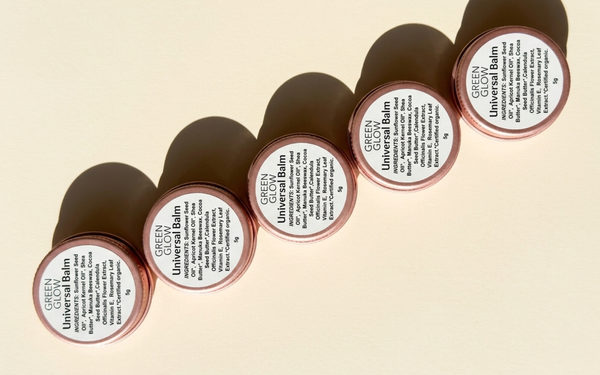
Waterless, and what that choice costs
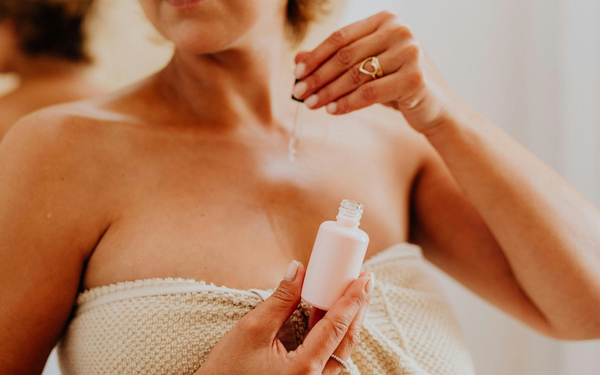
Abhyanga: what oiling your own skin actually does
Join the community
Slow beauty, in your inbox
Ritual guides, ingredient stories and 15% off your first order, for those who believe the best skincare comes from nature.
We respect your privacy. Unsubscribe at any time.

Let nature show its magic to you. Naturally derived skincare rooted in Ayurveda, handmade in small batches in Melbourne for sensitive, dry and ageing skin.