
Fragrance-free vs unscented: the label difference that matters
Unscented does not mean no fragrance. It can mean the opposite. Here is what each label allows, how to check an ingredient list, and why it matters for reactive skin.

These two words look interchangeable on a shelf and they are not. One of them can legitimately be printed on a product that contains added fragrance. If you are buying for reactive skin, this is the single most useful piece of label literacy there is.
What each one actually allows
| Fragrance-free | Unscented | |
|---|---|---|
| The claim | No fragrance materials added for the purpose of scent | The finished product has no noticeable smell |
| Can it contain added fragrance? | No | Yes. Often a masking fragrance, added to cover the smell of the base |
| What you will see on the INCI | No Parfum, no Fragrance, no essential oil names | May list Parfum or Fragrance near the end |
| Regulated? | Not a defined legal term in Australia. It is a marketing claim | Same |
| Useful for reactive skin? | Generally yes | Not reliably |
The counterintuitive part is real: "unscented" describes the smell, not the contents. Raw ingredients often smell of something, and the usual way to make a product smell of nothing is to add a masking fragrance. So an unscented product can contain more fragrance material than a lightly scented one.
Neither term is legally defined here, so both are ultimately claims rather than guarantees. The ingredient list is the part that is regulated. That is what to read.
How to check in ten seconds
Turn the product over and look for these words in the INCI:
- Parfum or Fragrance. Either can stand for dozens of individual components that do not have to be listed separately.
- Aroma, sometimes used on lip products.
- Any plant name followed by "Oil" in the aromatic families: lavender, peppermint, citrus, rose, ylang ylang, tea tree, eucalyptus, bergamot.
- Linalool, Limonene, Citronellol, Geraniol, Eugenol. These are individual fragrance allergens. They appear at the end of the list when a formula contains them above a threshold, and their presence tells you there is fragrance in there even if Parfum is not printed.
If none of those appear, the product is genuinely fragrance-free regardless of what the front of the bottle says.
Essential oils are fragrance
This is the uncomfortable one for natural skincare, and worth saying clearly given what we sell.
Essential oils are fragrance materials. They are concentrated aromatic plant compounds, and they sit near the top of most lists of common contact allergens in cosmetics. Lavender and tea tree in particular come up repeatedly. "Natural" does not mean "gentle", and a plant-derived fragrance can sensitise skin exactly as a synthetic one can.
Plenty of people use products with essential oils happily for a lifetime. But if your skin is reactive, "no synthetic fragrance" is not the reassurance it sounds like. What you want is no fragrance of any origin.
We have written before about why chemical-free is a marketing idea rather than a real one. This is the same problem wearing different clothes.
What we do, specifically
Both of our current formulas are fragrance-free in the strict sense. No parfum, no fragrance, and no essential oils added for scent.
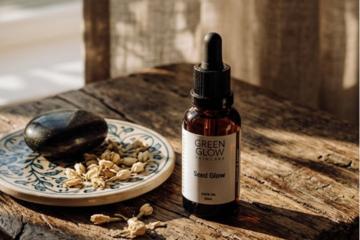
Seed Glow Face Oil is cold-pressed botanical oils with vitamin E, Q10, saffron extract and rosemary leaf extract. The rosemary is there as an antioxidant to keep the oils stable, not for smell. It has a faint nutty, green scent, which is simply what cold-pressed seed oils smell like. That is the smell of the ingredients, not something added to them. It contains macadamia and sweet almond oil, so it is not suitable with a tree-nut allergy.
Universal Balm is eight ingredients, waterless, with a soft honey-ish warmth that comes from the Manuka beeswax itself. The beeswax also means the balm is not vegan. Nothing has been added to make it smell of anything, and nothing has been added to make it smell of nothing.
So both are fragrance-free, and neither is odourless. Those are different things, and we would rather describe it accurately than print "unscented" on a jar that plainly smells of beeswax.
What this will not do
Removing fragrance does not make a product universally safe. Preservatives, plant extracts and even oils can all cause reactions in the right person, and fragrance-free products cause contact reactions too, just less often.
It also will not help if what you are dealing with is not contact irritation at all. Persistent redness, itching that will not settle, or a rash that spreads is worth taking to a GP or dermatologist rather than solving by elimination shopping.
Common questions
Is "hypoallergenic" a useful label?
Not especially. Like the other two, it is not legally defined in Australia. It signals intent rather than a tested standard.
What about "naturally fragranced"?
That means added essential oils. It is a scented product described warmly.
Can I develop a fragrance sensitivity later in life?
Yes. Sensitisation builds with repeated exposure, so a fragrance you have worn for twenty years can become a problem. It is one of the more common ways adult-onset reactivity shows up.
Does fragrance-free mean it will not smell of anything?
No, and any product made of real oils and butters will smell of real oils and butters. Fragrance-free means nothing was added for scent.
Continue reading
- How to read an ingredient list in sixty seconds
- Is your skin actually sensitive, or is it sensitised?
- The myth of chemical-free natural skincare
Built on the ideas in this post.
Ingredient transparency, handmade in Melbourne. The same care that goes into how we write goes into how we formulate.
Shop Seed Glow Face Oil
Why I formulate our products
Is Natural better than Synthetic ingredients
Why face oil all year round
Join the community
Slow beauty, in your inbox
Ritual guides, ingredient stories and 15% off your first order, for those who believe the best skincare comes from nature.
We respect your privacy. Unsubscribe at any time.

Let nature show its magic to you. Naturally derived skincare rooted in Ayurveda, handmade in small batches in Melbourne for sensitive, dry and ageing skin.