
How to patch test a new product properly
Every brand tells you to patch test. Almost none tell you how. The right place, the right number of days, and what a real reaction looks like.

Every product page in the industry says "patch test before use" and then stops, which is roughly as helpful as a recipe that says "cook until done". Done how? Where? For how long? Here is the actual method, and the reason the version most people do is close to useless.
Why the inside of your wrist is the wrong place
The wrist is where everyone tests, because it is convenient. It is also skin that is thicker than your face, gets washed several times a day, and behaves quite differently. A product can pass on your wrist and still upset your cheek.
Test on skin that resembles the skin you are worried about:
- For a face product, use the side of the neck just below the jaw, or the inner elbow. Both are thin, both are close to facial skin in behaviour, and neither is visible if something goes wrong.
- For a body product, the inner forearm is fine.
- If you already know your skin is reactive, use behind the ear. Least visible place on your body and unforgiving enough to be a real test.
The method
The other half of the problem is time. A single application and a look in the mirror an hour later tests for irritation only. Allergic contact reactions are slower, and they are the ones you actually want to catch.
- Apply a small amount to a patch about the size of a twenty cent piece. Use the product exactly as you would use it, undiluted.
- Leave it on. Do not wash the area for as long as you normally would not, which for a leave-on product means overnight.
- Repeat once a day for five days. This is the step everyone skips and the one that matters. A sensitising reaction often needs repeat exposure before it shows.
- Check the patch each day in daylight, before you reapply.
- If nothing happens by day five, introduce it to your face, on its own, with nothing else new that week.
Five days feels slow when you have just bought something. It is considerably faster than six weeks of a flare-up you cannot trace.
What a reaction actually looks like
Not everything you feel is a reaction, and this trips people up constantly.
Normal, and not a reason to stop:
- A brief warmth or tingle for a minute or two, especially on dry skin.
- Skin looking slightly shiny or feeling different in texture.
- A mild pinkness that has gone within fifteen minutes.
A reaction, and a reason to stop:
- Redness that is still there hours later or the next morning.
- Itching, particularly itching that builds over days rather than fading.
- Small bumps, dryness or flaking confined to the patch.
- Burning rather than tingling. Burning is a clear no.
The test is time. Sensations that fade are usually just sensation. Anything that is still visible the next day is your skin telling you something.
One new thing at a time
The most common way people end up unable to identify a trigger is introducing two products in the same week. If both go on and your skin objects, you have learned nothing and now have to eliminate twice.
Space new products a fortnight apart. It is tedious and it is the only way the information is worth anything.
Where this fits with our products
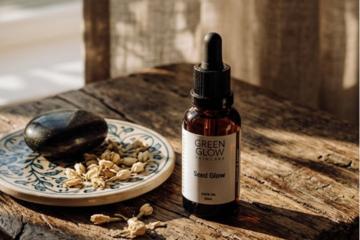
We ask people to patch test Seed Glow Face Oil and Universal Balm for the same reason as anything else, and there are two specifics worth naming rather than burying.
Seed Glow contains macadamia and sweet almond oil. If you have a tree-nut allergy, do not patch test it, just skip it. A patch test is not a safe way to explore a known allergy.
Universal Balm contains Manuka beeswax, which makes it not vegan and also means it is not suitable if you react to bee products. It also contains calendula, which is in the daisy family, so if ragweed, chrysanthemums or marigolds are a problem for you, that is worth knowing before you start rather than after.
Both are fragrance-free, with no parfum and no essential oils, which removes the most common cause of contact reactions but does not remove the need to test.
What this will not do
A patch test will not detect a photosensitivity reaction, which needs sun exposure to appear. It will not reliably predict how your skin behaves over months. And it will not catch reactions to ingredients that only cause trouble at higher concentrations or under occlusion.
It also cannot diagnose an allergy. What a dermatologist does is a different procedure, done under controlled conditions with standardised allergens, and if you are getting repeated reactions you cannot explain, that referral is worth asking your GP about. A home patch test is a screening step, not a diagnosis.
Common questions
How long should a patch test really be?
Five days for a leave-on product. Two or three is better than nothing but misses delayed reactions.
Can I patch test more than one product at once?
Yes, if you keep them physically separate and clearly labelled in your head. Different arms, or well spaced. Do not layer them.
What if I react?
Wash it off with cool water, stop using it, and give the area a few days. If the reaction is severe, spreading, or involves swelling, that is a doctor's appointment rather than a wait-and-see.
Do I need to patch test something I have used before?
If the formula has changed, yes. Sensitisation can also develop to something you have used happily for years, which is unfair but true.
Continue reading
- Is your skin actually sensitive, or is it sensitised?
- Fragrance-free vs unscented: the label difference that matters
- How to use facial oil: the right way
Built on the ideas in this post.
Ingredient transparency, handmade in Melbourne. The same care that goes into how we write goes into how we formulate.
Shop Seed Glow Face Oil
Why I formulate our products
Is Natural better than Synthetic ingredients
Why face oil all year round
Join the community
Slow beauty, in your inbox
Ritual guides, ingredient stories and 15% off your first order, for those who believe the best skincare comes from nature.
We respect your privacy. Unsubscribe at any time.

Let nature show its magic to you. Naturally derived skincare rooted in Ayurveda, handmade in small batches in Melbourne for sensitive, dry and ageing skin.