
Does what you eat actually show up on your skin?
Some diet and skin links are well supported, some are folklore, and the difference is not what the internet suggests. What the evidence actually shows.

"You are what you eat" is the oldest claim in beauty and one of the least examined. The truthful answer is that diet matters, less dramatically than wellness marketing suggests and more than dermatology used to allow, and the specific links that hold up are not the famous ones.
Worth saying at the top: we make skincare, not food, and none of this is medical or dietary advice. Skin changes that are persistent or distressing belong with a GP, and questions about your actual diet belong with an Accredited Practising Dietitian, who can look at what you eat rather than at averages.
What the evidence supports reasonably well
Blood sugar and acne. Diets high in rapidly absorbed carbohydrates, so white bread, sugary drinks, most breakfast cereals, are associated with more acne in a number of studies. The proposed mechanism runs through insulin and the hormonal signalling that follows. This is one of the better supported links, though "associated with" is not "causes", and it does not mean acne is anyone's fault.
Dairy, for some people. Repeatedly associated with acne in observational research, skim milk somewhat more than full fat, which is a strange result nobody has fully explained. The effect is modest and clearly does not apply to everyone.
Essential fatty acids. Your skin barrier is built partly from lipids, and some of those come from linoleic acid, which the body cannot make and has to get from food. A genuine deficiency causes dry, scaly skin. Actual deficiency is rare on a normal diet, but this is a real, mechanistic link rather than a hopeful one.
Alcohol. Dehydrating, dilates blood vessels, disrupts sleep. The effect on how skin looks the next morning is not subtle and does not require a study to notice.
Overall dietary pattern. Diets built on vegetables, fish, whole grains, nuts and olive oil are associated with better skin ageing outcomes. Whether that is the diet or everything that tends to travel with it is genuinely hard to untangle.
What is much weaker than you have been told
Chocolate. The classic accusation, and the evidence is poor. What research exists mostly implicates sugar and dairy in milk chocolate rather than cocoa.
"Detox" foods and skin cleansing. Your liver and kidneys do that. No food, tea or juice clears toxins from your skin, and skin is not an elimination organ in the way that framing implies.
Collagen drinks. Popular and genuinely contested. Ingested collagen is broken down into amino acids like any other protein, and the question is whether the resulting peptides signal anything useful. Some trials suggest modest effects on skin elasticity and hydration, several are industry funded, and the field is not settled. Not a scam, not established either.
Greasy food causing oily skin. No. Sebum production is hormonal. The fat in a hot chip does not travel to your face.
A single superfood. Nothing works like this. Dietary patterns show effects over months. Individual foods over a week show nothing.
The bigger levers, honestly
If the goal is how your skin looks in ten years, three things dominate everything on the plate: sun exposure, smoking, and sleep. UV is responsible for the large majority of visible skin ageing. Smoking is a distant but clear second. Sleep is the one people underestimate, and we have written about what actually happens to skin overnight.
Diet is real, and it is a smaller lever than sunscreen. Anyone selling you a food that undoes sun damage is selling you something.
What food will not do
Food will not repair a damaged barrier this week. Barrier repair happens at the surface, and it responds to what you stop doing to it and what you put on it, on a timescale of weeks. That is a different mechanism from nutrition, running in parallel.
Food will not treat eczema, psoriasis, rosacea or hormonal acne. Elimination diets undertaken without supervision are a common way to end up with a restricted diet and unchanged skin. If you suspect a food trigger, that is a conversation with a doctor or dietitian, not an experiment to run alone.
And no food replaces sunscreen. Not tomatoes, not green tea, not anything.
Where topical care actually fits
Nutrition builds the material your skin is made from. Topical care manages what happens at the surface: how much water leaves, how comfortable the barrier feels, whether it is being stripped daily. They are separate jobs, and neither substitutes for the other.
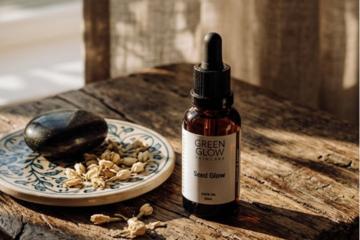
That surface job is what our formulas do, and no more than that. Seed Glow Face Oil supplies plant lipids to the outer layers, and Universal Balm seals them in. Neither is a supplement, neither treats a condition, and if the barrier is being stripped every morning by a foaming cleanser, no diet will out-argue that. Seed Glow contains macadamia and sweet almond oil, so avoid it with a tree-nut allergy. The balm contains Manuka beeswax, so it is not vegan.
Common questions
How long before a diet change shows on my skin?
Skin cell turnover runs on roughly a month, so give any change eight to twelve weeks before judging it.
Should I cut dairy for my skin?
Not on a general recommendation. If you want to test it, do it for eight weeks with a plan for calcium and protein, ideally with a dietitian.
Do supplements help?
If you are deficient in something, correcting it helps. If you are not, the evidence for extra is thin. Testing before supplementing is more sensible than guessing, and some supplements interact with medications.
Is drinking more water going to help?
Less than you would think, and we gave that its own post: does drinking more water help dry skin?
Continue reading
- The nutrients your skin barrier is actually built from
- Does drinking more water help dry skin?
- What actually happens to your skin while you sleep
Built on the ideas in this post.
Ingredient transparency, handmade in Melbourne. The same care that goes into how we write goes into how we formulate.
Shop Seed Glow Face Oil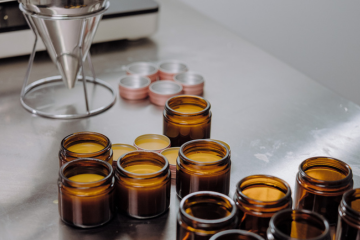
Why I formulate our products
Is Natural better than Synthetic ingredients
Why face oil all year round
Join the community
Slow beauty, in your inbox
Ritual guides, ingredient stories and 15% off your first order, for those who believe the best skincare comes from nature.
We respect your privacy. Unsubscribe at any time.

Let nature show its magic to you. Naturally derived skincare rooted in Ayurveda, handmade in small batches in Melbourne for sensitive, dry and ageing skin.