
The nutrients your skin barrier is actually built from
Your barrier is made of lipids, proteins and the nutrients that assemble them. What each one does, where it comes from in food, and why supplements are rarely the answer.

The outer layer of your skin gets described as a brick wall so often that the metaphor has stopped meaning anything. The useful part is what the mortar is made of, because those materials come from somewhere, and where they come from is food.
Before the list, the honest framing. In Australia, on a reasonably varied diet, outright deficiency in most of these is uncommon. This is a guide to what your skin is built from, not a shopping list, and not medical or dietary advice. If you think you are short of something, testing beats guessing, and an Accredited Practising Dietitian or your GP is the right person for that conversation.
The lipids
Linoleic acid. An omega-6 fatty acid your body cannot manufacture, and a direct structural component of ceramides in the outer skin layer. A real deficiency produces dry, scaly skin, which is one of the clearest food-to-skin links there is. Found in sunflower seeds, safflower and sunflower oils, walnuts, and most nuts and seeds. Rare to be short of, because it is in almost everything.
Omega-3s, particularly EPA and DHA. Involved in the body's inflammatory signalling, which is why they come up in discussions of inflammatory skin conditions. The research is promising in places and not conclusive. Found in oily fish such as salmon, sardines and mackerel, and in a less usable precursor form in flaxseed, chia and walnuts.
The ratio between the two matters more than either alone, and most modern diets run heavy on omega-6 and light on omega-3. Eating more fish is a more reliable adjustment than buying capsules.
The proteins
Protein generally. Keratin and collagen are proteins, built from amino acids you eat. There is no clever version of this. Chronically low protein intake shows up in skin, hair and nails, and it shows up in older adults more often than people expect.
Vitamin C. Not optional for collagen synthesis. It is a required cofactor for the enzymes that stabilise the collagen molecule, which is why scurvy presents partly as a skin and wound-healing disorder. This is established biochemistry rather than a wellness claim. Capsicum, kiwifruit, citrus, broccoli, strawberries. Easy to get, easy to destroy with prolonged cooking.
Zinc. A cofactor for a long list of enzymes involved in skin repair and immune function. Deficiency causes a distinctive dermatitis. Oysters are the famous source, then red meat, pumpkin seeds, chickpeas and cashews. Worth knowing that high-dose zinc supplementation interferes with copper absorption, which is one reason self-prescribing is a poor idea.
The protectors
Vitamin E. Fat-soluble antioxidant that sits in cell membranes and in skin lipids, protecting them from oxidation. It works in both directions here: it is in the food you eat, and it is in the oils you apply, where it also keeps the oils themselves from going rancid. Sunflower seeds, almonds, avocado, olive oil.
Vitamin A. Regulates skin cell turnover and differentiation, which is why its derivatives are the most evidenced topical actives in the industry. From food you get retinol in liver, eggs and dairy, and beta-carotene the body converts in carrots, sweet potato and dark leafy greens. Worth flagging clearly: high-dose vitamin A supplementation is genuinely risky, particularly in pregnancy. Do not take it casually.
Polyphenols. The colour compounds in vegetables, berries, tea, olive oil and cocoa. Associated with better skin ageing outcomes in dietary pattern studies. The effect belongs to the overall pattern rather than any single source, and this is the part of nutrition science most oversold.
The pattern, not the parts
The thing that recurs in the research is that these nutrients perform better as a diet than as a pile of isolated capsules. Vitamin E works with vitamin C. Beta-carotene absorbs with fat. Zinc competes with copper. Whole foods deliver these in combinations that supplements struggle to imitate, which is a boring finding and a consistent one.
The general shape: plenty of vegetables, some oily fish, nuts and seeds, olive oil, adequate protein, not much ultra-processed food. That is the same advice as for your heart, which is unglamorous but real.
What food will not do
None of this repairs a barrier at the speed people want. Nutrition supplies the raw materials over months. It does not compensate for a barrier being stripped daily by hot showers and a foaming cleanser, and it will not out-argue a routine that is causing the problem. If your skin is tight, flaky and reactive right now, the faster lever is at the surface, and we covered which one to reach for in occlusive, emollient, humectant.
Nor will any of this treat a skin condition. Eczema, psoriasis and dermatitis are medical, and a nutrient list is not a treatment plan.
The topical half of the same job
Some of these materials can also be supplied directly to the outer layers, which is what a plant oil is.
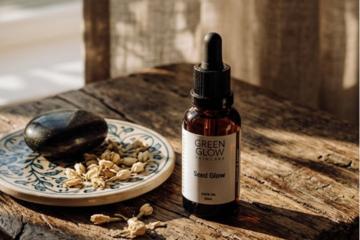
Seed Glow Face Oil is cold-pressed botanical oils carrying fatty acids, with vitamin E, Q10 and saffron extract. Cold-pressing is the reason those survive: heat refining strips much of it out, which we explained in why cold-press matters. It contains macadamia and sweet almond oil, so avoid it with a tree-nut allergy.
Universal Balm approaches it from the other direction, with unrefined organic shea and cocoa butter, sunflower and apricot kernel oils, plus vitamin E and calendula, sealed under Manuka beeswax so what is underneath stays put. The beeswax means it is not vegan.
Neither is a substitute for eating well. They work on the outside of the same wall.
Common questions
Should I take a collagen supplement?
The evidence is mixed and much of it is industry funded. Adequate protein and vitamin C give your body what it needs to make its own.
Do I need a supplement if I eat well?
Usually not. Specific groups have specific needs, which is exactly the sort of question to take to a GP or dietitian rather than a search engine.
Which single nutrient matters most for dry skin?
There is not one. If the diet is broadly adequate, dry skin is far more often a barrier and environment problem than a nutritional one.
Can I get enough omega-3 without fish?
Plant sources give ALA, which the body converts to EPA and DHA inefficiently. Algae-based options exist and are worth asking a dietitian about.
Continue reading
- Does what you eat actually show up on your skin?
- Why cold-press matters
- Occlusive, emollient, humectant: which one your dry skin actually needs
Built on the ideas in this post.
Ingredient transparency, handmade in Melbourne. The same care that goes into how we write goes into how we formulate.
Shop Seed Glow Face Oil
Why I formulate our products
Is Natural better than Synthetic ingredients
Why face oil all year round
Join the community
Slow beauty, in your inbox
Ritual guides, ingredient stories and 15% off your first order, for those who believe the best skincare comes from nature.
We respect your privacy. Unsubscribe at any time.

Let nature show its magic to you. Naturally derived skincare rooted in Ayurveda, handmade in small batches in Melbourne for sensitive, dry and ageing skin.