
Does drinking more water help dry skin?
The eight glasses advice does very little for dry skin, and here is why. What actually controls skin hydration, and the change that works within days.

This is the most repeated piece of skincare advice in existence, given freely by everyone, and it is mostly wrong. Not completely, which is what makes it stubborn. If you are already reasonably hydrated, drinking more water will not do much for dry skin, and the reason is worth understanding because it points straight at the thing that does work.
Why it does not work the way people assume
The picture in everyone's head is a plant. Water goes in at the roots, the leaves perk up. Skin does not work like that.
Water you drink is absorbed into the bloodstream and distributed by the body according to its own priorities. Skin, particularly the outermost layer, is near the end of that queue. Your body maintains blood volume and organ function first, and it will not send surplus water to your face because you had another glass.
The outermost layer, the stratum corneum, is dead cells and lipids. It holds water by not letting it escape, not by receiving deliveries from below. Its water content is governed by two things: how much water leaves through the surface, and what is holding water in place up there.
That first process has a name worth knowing, transepidermal water loss. It is the variable that actually determines whether your skin feels dry, and no amount of drinking changes it.
Where the advice does hold
Genuine dehydration is different, and it does show on skin. If you are unwell, exercising hard in heat, drinking a lot of alcohol, or simply not drinking much at all, correcting that improves skin along with everything else.
The distinction is between correcting a deficit and adding a surplus. Going from too little water to enough helps. Going from enough to more does approximately nothing, and the studies that have looked at this in already-hydrated people find little to no measurable change in skin hydration.
So drink when you are thirsty. Just do not expect it to fix flaking.
Dry skin and dehydrated skin are not the same thing
This confusion powers a lot of wasted money.
| Dry skin | Dehydrated skin | |
|---|---|---|
| What is missing | Oil, so lipids | Water |
| Is it permanent? | A skin type. Largely genetic | A condition. Temporary and fixable |
| How it looks | Flaky, rough, dull, can be tight | Dull, fine lines look deeper, skin can still be oily |
| The tell | Rarely oily anywhere | Oily and flaky at the same time |
| What helps | Lipids: oils, butters, a seal | Humectants first, then a seal to hold it |
Oily skin can be dehydrated. Dry skin can be well hydrated. They are separate axes, and treating one as the other is why people end up with a bathroom full of products that all disappointed them slightly.
What actually changes skin hydration
In rough order of how quickly you will notice:
- Stop the water leaving. An occlusive layer on top slows transepidermal water loss. This is the single fastest change available, often visible overnight, and it is why a balm on cracked hands works when hand cream did not. We wrote that one up in how to fix cracked hands and split cuticles.
- Apply to damp skin. Within a minute of washing, while the surface still holds water. Applying anything hydrating to a bone-dry face in a heated room is working against yourself.
- Turn the shower down. Hot water strips the surface lipids that hold everything together. Warm, and shorter.
- Add humidity to the room. In a heated bedroom in a Melbourne winter, the air is pulling water out of you all night. A humidifier, or even a bowl of water near the heater, changes things measurably.
- Use a humectant, but seal it. Glycerin and hyaluronic acid draw water into the upper layers. In dry air, with nothing over the top, a humectant can pull moisture from your skin and let it evaporate. Always seal.
The full mechanism behind those steps is in occlusive, emollient, humectant, which is the piece that makes the rest of this make sense.
The seal, in practice
Step one is where our formulas live, and it is the reason Universal Balm exists in the shape it does. Waterless, so nothing in it evaporates, with Manuka beeswax and cocoa seed butter forming the seal and organic shea, sunflower and apricot kernel oils softening underneath. Warm a small amount between your fingers and press it on last, over whatever hydrating step came before. It contains beeswax, so it is not vegan.
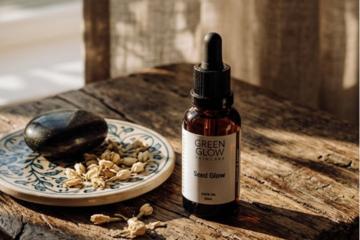
For the softening step under it, Seed Glow Face Oil supplies the lipids. It contains macadamia and sweet almond oil, so skip it with a tree-nut allergy. Together those cover two of the three jobs, and the third, the water itself, has to come from a humectant or from damp skin.
What none of them do is put water into your skin from the inside. Nothing does that.
What this will not do
Drinking water will not fix eczema, dermatitis or any skin condition, and neither will a balm. Skin that is cracked, weeping, spreading or not improving over a couple of weeks is a GP appointment.
Nor is this an argument for drinking less. Water is good for you for reasons that have nothing to do with your face.
Common questions
How much water should I actually drink?
Enough that you are not thirsty and your urine is pale. Fixed numbers ignore body size, climate and activity, and food contributes a fair amount too.
Does coffee dehydrate me?
Not meaningfully at normal intakes. The diuretic effect is offset by the water in the drink.
Why does my skin feel tight after a shower?
Hot water stripped the surface lipids and the remaining water evaporated. Apply something within a minute, while skin is damp, and turn the temperature down.
Do hyaluronic acid serums work?
Yes, in the upper layers, and better when sealed. In dry air with nothing over the top they can make things worse.
Continue reading
- Occlusive, emollient, humectant: which one your dry skin actually needs
- Does what you eat actually show up on your skin?
- Why skin cracks in winter, and what actually stops it
Built on the ideas in this post.
Ingredient transparency, handmade in Melbourne. The same care that goes into how we write goes into how we formulate.
Shop Universal Balm
Why I formulate our products
Is Natural better than Synthetic ingredients
Why face oil all year round
Join the community
Slow beauty, in your inbox
Ritual guides, ingredient stories and 15% off your first order, for those who believe the best skincare comes from nature.
We respect your privacy. Unsubscribe at any time.

Let nature show its magic to you. Naturally derived skincare rooted in Ayurveda, handmade in small batches in Melbourne for sensitive, dry and ageing skin.