
Ten ingredient names that sound alarming, and what they actually do
Cetearyl alcohol, phenoxyethanol, polysorbate, disodium EDTA. What ten of the most misunderstood ingredient names actually do, and why preservatives are a safety feature rather than a compromise.

There is a whole industry built on making you afraid of ingredient lists. Apps that score ingredients red, posts that circle a long word and imply the worst, brands that build their entire identity on what they have left out. It sells well, and it leaves people scared of their own bathroom shelf without understanding anything more than they did before.
We would rather do the opposite. A long name is not a warning, a short name is not a reassurance, and once you know what about ten common words mean, most ingredient lists stop being intimidating. That is a better outcome for you than fear, and honestly a better outcome for us, because a customer who can read a label can tell what our products are without taking our word for it.
The rule that does more work than any list
Before the names: the amount matters more than the presence. An ingredient near the bottom of a list is there at a fraction of a percent, usually doing a small structural job. The same ingredient at the top would be a different product.
An ingredient list tells you what is in something, not whether it is safe, and safety is a question about dose and context rather than about how many syllables a word has. If you have not read our guide to reading a list in sixty seconds, that covers the order, the 1% line and how to find it.
Ten names, decoded
| Name on the label | What it actually is | What it is doing |
|---|---|---|
| Aqua | Water | The base of most creams, lotions and serums. Often 60 to 80% of the product |
| Glycerin | A simple humectant, usually plant derived | Pulls water into the upper layers of skin. One of the most studied and best tolerated ingredients in cosmetics |
| Cetearyl Alcohol | A fatty alcohol, from coconut or palm | Thickens the formula and softens skin. Not a drying alcohol. See below, this is the big one |
| Glyceryl Stearate & PEG-100 Stearate | An emulsifier pair | Holds oil and water together so the cream does not separate into two layers in the jar |
| Polysorbate 20 | A solubiliser | Lets a small amount of oil disperse evenly through a watery product |
| Xanthan Gum | A polysaccharide made by fermenting sugar with bacteria | Thickens and stabilises. Also in your salad dressing |
| Phenoxyethanol | A preservative | Stops bacteria, yeast and mould growing. Capped at 1% in the EU and used at similar levels here |
| Sodium Benzoate & Potassium Sorbate | A preservative pair | Same job, effective in acidic formulas. Both also used in food |
| Citric Acid | An acid, from citrus or fermentation | At the bottom of a list, adjusting the pH by a fraction of a percent. Not exfoliating at that level |
| Disodium EDTA | A chelator | Binds trace metal ions from the water so the formula stays stable and the preservative keeps working |
Two more worth knowing because they turn up constantly: Tocopherol is vitamin E, an antioxidant that protects the oils in a formula from going rancid as much as it does anything for your skin, and Ethylhexylglycerin is usually there to make the preservative work harder so less of it is needed.
Notice how many of these are structural. Emulsifiers, thickeners, chelators and pH adjusters are not doing anything to your face directly. They are what stops a cream from splitting, going off, or feeling like wet sand. A formula is an engineered thing, and most of the long words are the engineering.
The alcohol confusion, which is the big one
If you take one thing from this article, take this. Fatty alcohols and drying alcohols are chemically different things that share a word.
Fatty alcohols are waxy, derived from plant oils, and they soften skin and thicken formulas. On a label they look like:
- Cetearyl Alcohol
- Cetyl Alcohol
- Stearyl Alcohol
- Behenyl Alcohol
These are emollients. They are in most rich moisturisers precisely because they are conditioning. Someone with dry skin avoiding cetearyl alcohol is avoiding one of the things that would have helped.
The drying ones are volatile solvents, and they look like:
- Alcohol Denat.
- SD Alcohol 40
- Isopropyl Alcohol
- Ethanol
These evaporate fast and can be genuinely stripping in high amounts, which is why toners heavy in them earned their reputation. Even here the honest answer is "in high amounts", because small quantities are used to help other ingredients dissolve without doing any harm.
One word, two entirely different families. The ingredient-scoring apps frequently do not distinguish between them, which tells you something about the ingredient-scoring apps.
Why preservatives are a feature, not a compromise
This is the one where fear-mongering does the most actual damage, so it is worth being direct.
Any product containing water can grow things. Water plus the nutrients in a formula, plant extracts especially, is a growth medium. Bacteria, yeast and mould do not need much. Add fingers going into a jar in a warm bathroom and you have given them everything they need.
A contaminated cosmetic is not a theoretical problem. Pseudomonas and staph contamination in eye and face products is a documented cause of real infections, and products get recalled for it regularly. Preservatives exist because of that history, not in spite of it.
So when a water-containing product says "preservative-free", one of three things is true:
- It is preserved by something the brand does not want to call a preservative. Radish root ferment, certain glycols and some "natural antimicrobial" blends are preservatives doing a preservative's job. The label is marketing, not chemistry.
- It relies on packaging. Airless pumps genuinely reduce contamination compared with an open jar. They reduce it. They do not remove the need.
- It is genuinely unpreserved, in which case it has a very short shelf life, probably needs refrigerating, and you should treat it like fresh food.
Well-formulated products are challenge tested, which means deliberately inoculating the formula with microbes and confirming the preservative system kills them off. That test is the reason your moisturiser is safe in month six.
None of this means every preservative suits every person. Some people react to some of them, and that is a real thing worth patch testing for. But "contains a preservative" is not a red flag. It is the sign of a product that was formulated by someone thinking about your safety.
Where we sit, and why it is not a virtue
Here is the part where being honest is more useful than being flattering.
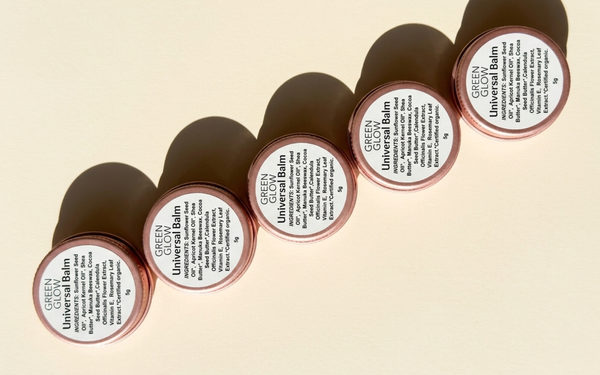
Neither Seed Glow Face Oil nor Universal Balm contains a preservative, and that is not because we are more careful than anyone else. It is because both are waterless. No water phase means no environment for microbes to grow in, so no preservative is required. It is a consequence of the format, not a moral achievement, and any brand telling you their waterless oil is preservative-free as though it were a triumph is overselling a technicality.
Two honest caveats that follow from it:
Waterless is not the same as immune. Getting water into a balm jar, wet fingers after a shower being the usual culprit, introduces exactly the conditions the formula was avoiding. Dry hands, or a small spatula, and the jar behaves itself.
A short ingredient list means fewer functions, not better ones. Our balm has eight ingredients because it does one thing, seals. A well-made cream has thirty because it has to hold oil and water together, stay stable for two years, spread lightly, and deliver water-soluble ingredients a balm simply cannot carry. That is more engineering, not worse engineering.
What we will say for our own lists is that they are short enough to print in full and short enough to troubleshoot, which is genuinely useful if your skin is reactive. Seed Glow contains macadamia and sweet almond oil, so it is not suitable with a tree-nut allergy, and Universal Balm contains Manuka beeswax, so it is not vegan. Both facts are on the label, which is where facts belong.
What this will not do
Knowing what an ingredient does will not tell you whether it suits you. Tolerance is individual, and the only way to find out is to patch test properly.
This also is not a safety assessment. Cosmetic ingredients in Australia are regulated, ingredient safety is assessed by people who do it for a living, and a blog post is not a substitute for that. If you have a diagnosed allergy or a skin condition, your GP or dermatologist knows your situation and an ingredient app does not.
Common questions
Is cetearyl alcohol bad for skin?
No. It is a fatty alcohol, an emollient, and it is in rich moisturisers because it softens. It is not related in behaviour to the drying alcohols.
Should I avoid phenoxyethanol?
Not on general principle. It is one of the most widely used preservatives in cosmetics, capped at low concentrations. If you have specifically reacted to it, avoid it.
Are ingredient rating apps useful?
As a way to look up what something does, sometimes. As a safety verdict, no. Most score on hazard rather than on the dose actually used, which is the part that matters, and several do not distinguish between chemically unrelated ingredients with similar names.
Why does my product contain citric acid if it is not an exfoliant?
Almost certainly to set the pH. Formulas work in a narrow pH range, and a fraction of a percent of citric acid is how you get there.
Is "chemical-free" ever accurate?
No. Everything is a chemical, including water and shea butter. We wrote a whole post on why that phrase is a marketing idea.
Continue reading
- How to read an ingredient list in sixty seconds
- Natural vs synthetic skincare: what the words mean on a label
- Fragrance-free vs unscented: the label difference that matters
Built on the ideas in this post.
Ingredient transparency, handmade in Melbourne. The same care that goes into how we write goes into how we formulate.
Shop Seed Glow Face Oil →
Kapha season
Waterless, and what that choice costs
Abhyanga: what oiling your own skin actually does
Join the community
Slow beauty, in your inbox
Ritual guides, ingredient stories and 15% off your first order, for those who believe the best skincare comes from nature.
We respect your privacy. Unsubscribe at any time.

Let nature show its magic to you. Naturally derived skincare rooted in Ayurveda, handmade in small batches in Melbourne for sensitive, dry and ageing skin.