
When skincare actually goes off, and how to store it
What the little open-jar number means, how to tell when an oil has turned, and the storage mistakes that shorten a product's life by months.

Almost nobody knows what the little open-jar symbol on the back of a product means, which is a shame, because it is the most useful number on the packaging. Here is how to read it, how to tell when something has genuinely turned, and the storage habits that quietly cost you months of a product's life.
The two dates, and only one is about you opening it
The PAO, or Period After Opening. That is the open-jar symbol with a number in it: 6M, 12M, 24M. It means the product is good for that many months from the day you first open it, stored sensibly. An unopened product is not counting down its PAO.
The expiry or best-before date. Less common on cosmetics, required when a product is stable for less than thirty months. This one counts from manufacture regardless of whether you have opened it.
If a product has both, the tighter one wins. If it has only a PAO, the clock starts at first opening, which is why writing the month on the base of the jar with a marker is the single most useful thing you can do. Everyone thinks they will remember. Nobody remembers.
What "going off" actually means
Two different failures, and they look nothing alike.
Microbial growth is the water-based failure. Bacteria, yeast or mould in a cream. Signs are visible: a change in colour, a film, separation that will not stir back together, a sour or musty smell, or actual spots of mould. This is the failure that preservatives exist to prevent, and it is why we are firm that preservatives are a safety feature rather than a compromise.
Oxidation is the oil-based failure, and it is the one that matters for a face oil or a balm. There is no water for microbes to live in, so instead the oils themselves react with oxygen over time and go rancid. Nothing grows. The oil simply degrades.
The tell for oxidation is smell. A cold-pressed oil smells faintly nutty, green, seedy. A rancid one smells sharp and stale, a bit like old crayons or a nut you should not have eaten. Once you have smelled it you never mistake it. Colour can deepen too, and the texture can get slightly sticky.
Rancid oil is not dangerous in the way a contaminated cream is. It is just no longer doing much for you, and oxidised oils are more likely to irritate.
The four things that age a product fastest
In order of how much damage they do:
- Light. Especially direct sunlight, and especially on oils. This is why good oils come in amber or dark glass, and why leaving a bottle on a sunny windowsill is the worst thing you can do to it.
- Heat. A bathroom that gets steamy twice a day is the warmest, dampest room in the house, and it is where almost everyone stores skincare. A bedroom drawer is meaningfully better.
- Air. Every opening exchanges the air inside. Droppers and pumps are better than open jars for this reason, and a nearly empty bottle degrades faster than a full one because of the volume of air sitting on top of it.
- Fingers. Every dip introduces bacteria and, worse for a waterless product, water. Clean dry hands, or a small spatula.
The bathroom cabinet is a habit, not a plan. If you can move the things you care about to a cool, dark drawer, they will last longer.
Our two, specifically
Seed Glow Face Oil has a PAO of six months and should be kept out of direct sunlight. Six months is shorter than a lot of face oils and that is deliberate. It is sixteen cold-pressed oils with no synthetic stabilisers beyond the vitamin E and rosemary extract that are naturally part of the formula, and cold-pressed oils that have kept their nutrient content are exactly the oils that are most reactive to oxygen. The trade-off for keeping the good parts intact is a shorter window. If you use it nightly, three to four drops, the 10ml comfortably finishes well inside that.
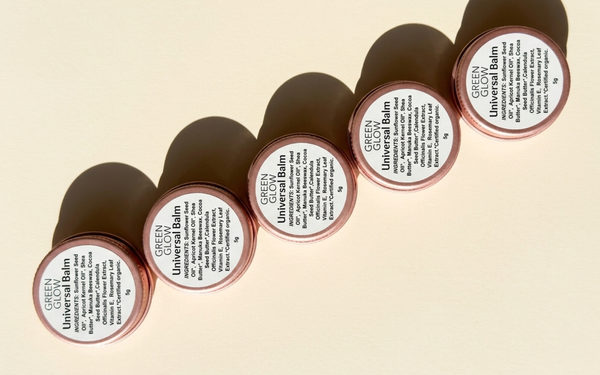
Universal Balm is waterless and sits in a jar, so the failure mode to guard against is water getting in rather than the balm going off quickly. Dry fingers, lid on properly, out of a hot bathroom, and check the base of your jar for the PAO symbol. Beeswax and butters are considerably more stable than delicate seed oils, which is part of why a balm behaves differently from an oil.
Neither will announce itself with a date on the front. Write the month you opened it on the bottom.
When to throw something out
- It smells different from when you bought it. The most reliable signal you have.
- The texture has changed and does not come back with warming or stirring.
- The colour has shifted noticeably.
- Anything is growing in it. Immediately, no negotiation.
- It is well past the PAO and you cannot remember when you opened it.
- It stings now and did not before. Oxidised oils and degraded actives are both more irritating than fresh ones.
Sunscreen deserves a separate mention: do not push your luck with an old or heat-damaged sunscreen. Its whole job is a job you cannot see it failing at.
What this will not do
Storage cannot rescue something already oxidised, and there is no way to reverse it. Refrigerating an oil slows oxidation and is a reasonable habit in a hot climate, but it is not a way to extend a PAO indefinitely, and some formulas turn cloudy or thicken in the cold. Balms and butters in particular firm up considerably.
None of this is a safety assessment either. If a product has caused a reaction, the question is not whether it is old, it is whether it suits you, and that is what a patch test is for.
Common questions
Does an unopened product expire?
Eventually, but the PAO is not counting yet. Cool and dark still applies to your backup jar.
Can I use a face oil past six months?
Smell it. If it smells the way it did when it was new, it is likely fine. If it smells sharp or stale, stop, because oxidised oil is more likely to irritate than to help.
Should I keep skincare in the fridge?
Optional. It genuinely slows oxidation in oils and is pleasant on the face in summer. Skip it for balms and anything that separates when cold.
Does a bathroom really matter that much?
Yes, more than people expect. Repeated heat and humidity cycles are hard on formulas, and it is the single easiest thing to change.
Why do some products have no PAO at all?
Products stable for more than thirty months may carry a PAO instead of an expiry, and very stable formats sometimes carry neither. Absence is not a promise of immortality.
Continue reading
- Ten ingredient names that sound alarming, and what they actually do
- Why cold-press matters
- How to read an ingredient list in sixty seconds
Built on the ideas in this post.
Ingredient transparency, handmade in Melbourne. The same care that goes into how we write goes into how we formulate.
Shop Seed Glow Face Oil →
Kapha season
Waterless, and what that choice costs
Abhyanga: what oiling your own skin actually does
Join the community
Slow beauty, in your inbox
Ritual guides, ingredient stories and 15% off your first order, for those who believe the best skincare comes from nature.
We respect your privacy. Unsubscribe at any time.

Let nature show its magic to you. Naturally derived skincare rooted in Ayurveda, handmade in small batches in Melbourne for sensitive, dry and ageing skin.