
Ubtan, the original cleanser.
Ubtan is the cleansing paste that predates every cleanser on your shelf. How it is made, why it works, and the honest reason there is not a jar of it on my product page.

Before there were cleansers there was ubtan. A paste, mixed fresh, made of flour, a spice or two and something wet to bring it together. It is one of the oldest preparations in the Ayurvedic household and it is still made in kitchens across India every day.
What ubtan actually is
At its simplest, three parts.
A flour or ground pulse. Usually besan, which is chickpea flour. Sometimes ground moong dal, sometimes rice flour or a mix. This is the body of the paste and the part that does the mechanical work.
A spice or botanical. Turmeric almost always. Often sandalwood, sometimes neem, sometimes a ground herb depending on the household and the region.
Something to bring it together. Milk, yoghurt, rosewater or plain water, depending on who is making it and for whom.
Mixed to a loose paste, applied, left for a few minutes, then rubbed off gently with damp hands.
Recipes are regional and familial rather than fixed. There is no single correct ubtan, which is part of the point and, as it turns out, part of the problem.
Why it works
Nothing mysterious, and that is what I like about it.
The flour does two jobs. Ground pulses have a mild surface activity, so the paste lifts oil and dirt without a detergent. And the particle size gives gentle physical exfoliation as you rub it off, which is far softer than most scrubs sold for the purpose.
The wet ingredient sets the strength. Water makes a plainer, more clarifying paste. Milk or yoghurt makes it richer and gentler, which is why they are the traditional choice for dry skin.
It is made fresh, so nothing has degraded. This is the quiet advantage, and I will come back to it.
Turmeric and sandalwood have long histories of traditional use in these preparations. I am going to leave that as a statement about tradition rather than dress it up as a skin claim, because that is all I can honestly support.
How to make one
For normal to dry skin, which is most of the people who read this journal.
- Two teaspoons besan (chickpea flour)
- A small pinch of turmeric, and go smaller than you think
- Enough milk, yoghurt or rosewater to make a loose paste
Mix in your palm. Apply to damp skin. Leave three to five minutes, no longer, and do not let it dry hard and crack. Loosen with warm water and rub off gently with your fingertips, in small circles. Pat dry, leave the skin damp, and go straight in with your oil.
That last step is the one people miss. Ubtan removes surface oil, and skin left bare afterwards will feel tight within the hour. Damp skin then an occlusive is the whole finish.
Once or twice a week is plenty. This is not a daily cleanser and treating it as one is how people end up with sensitised skin.
A note on turmeric: it stains. Fabric permanently, fair skin temporarily. A pinch is genuinely enough, and do not do this an hour before you need to be somewhere.
Why there is not a jar of it on my product page
Freshness is the active ingredient. Ubtan works because it is mixed minutes before use, from dry ingredients that were stable until the moment they were wet. That is the entire design. A pre-mixed wet paste in a jar is a different object.
A shelf-stable version needs preserving, and then it is not the same thing. Introduce water and you need a preservative system, which I would defend without hesitation, since preservatives are a safety feature. But at that point I have taken a fresh preparation, added things it never had, and sold it back to you at a markup. I could sell the dry blend instead, which is honest, and which is also just flour and turmeric that you can buy for a few dollars at any grocer.
What ubtan is not
It is not a treatment for acne, pigmentation or any skin condition, whatever the internet claims for turmeric. Those belong with a GP or dermatologist.
It is not gentler by virtue of being natural. It is a physical exfoliant, and used daily or scrubbed hard it will do damage, same as any other. Natural is not a regulated word and it is not a safety rating.
And it is not a replacement for a proper cleanser if you wear heavy sunscreen or makeup. It lifts surface oil. It does not remove everything.
Common questions
Can I use it if my skin is sensitive?
Go carefully. Skip the turmeric, use yoghurt rather than water, leave it on for less time, and patch test on your jaw before your whole face.
How often?
Once a week for most people. Twice at the very most.
Can I make a batch and keep it?
Keep the dry blend in a jar, absolutely. Do not pre-mix it wet, for the reasons above.
What do I use after?
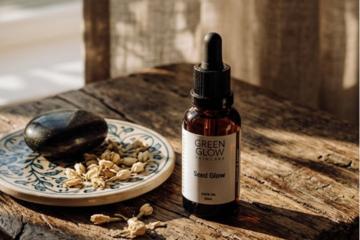
Something on damp skin, straight away. Three or four drops of a facial oil like Seed Glow, pressed in.
Continue reading
- What is Ayurveda
- Dinacharya: the Ayurvedic daily rhythm
- Natural vs synthetic skincare: what the words mean on a label
Built on the ideas in this post.
Ingredient transparency, handmade in Melbourne. The same care that goes into how we write goes into how we formulate.
Shop Seed Glow Face Oil
Why I formulate our products
Is Natural better than Synthetic ingredients
Why face oil all year round
Join the community
Slow beauty, in your inbox
Ritual guides, ingredient stories and 15% off your first order, for those who believe the best skincare comes from nature.
We respect your privacy. Unsubscribe at any time.

Let nature show its magic to you. Naturally derived skincare rooted in Ayurveda, handmade in small batches in Melbourne for sensitive, dry and ageing skin.