
Why a higher percentage is not a better product
20% vitamin C is not twice as good as 10%, and can be worse. How concentration, pH and the formula around an active decide whether it works.

Percentages on the front of a bottle have become a shorthand for strength, and strength has become a shorthand for quality. Both steps are wrong. An active does not work like a volume dial, and for several of the most popular ones the higher number is either no better or actively worse for your skin.
Concentration is a curve, not a line
Most actives have a range where they work, above which you get no additional benefit and below which not much happens. Past the top of that range, all you are adding is irritation.
Vitamin C. L-ascorbic acid is the well-studied form, and absorption is generally taken to plateau around 20%. Above that you are not getting more in, you are getting more sting. Many people do better at 10% than 15% or 20%, because the amount that penetrates is similar and the discomfort is not.
Niacinamide. 5% is the concentration most of the useful research sits at. 10% is common on shelves and is not five per cent better. For a fair number of people it flushes and irritates where 5% did not.
Retinoids. Here the limiting factor is not the ceiling of effectiveness, it is your tolerance. A low-strength retinoid used consistently for a year beats a high-strength one you abandon in February because your face is peeling. Consistency is the active ingredient.
AHAs and BHAs. The percentage is close to meaningless on its own, because what determines the effect is the free acid available at the formula's pH. A 10% glycolic at pH 4.5 can be gentler than a 5% at pH 3.2. The number on the front does not tell you which you have.
pH is the variable nobody prints
This is the hidden half of the story.
An active only works in the pH range its chemistry allows. L-ascorbic acid needs an acidic formula, generally below about pH 3.5, to penetrate at all, which is also why it stings and why it degrades so readily. Exfoliating acids need to be acidic enough that a useful proportion is in its active free form. Move the pH and the same percentage behaves like a different product.
Very few brands disclose pH. Almost all disclose percentage. So the industry competes on the number it can print, which is not the number that decides the outcome.
The formula around the active does the rest
The same percentage of the same ingredient can perform completely differently depending on what it is dissolved in, whether it is protected from light and air, what else is in there, and how quickly it degrades once opened.
Vitamin C is the clearest case: an unstable L-ascorbic acid serum in a clear bottle can be largely oxidised before you finish it, and the giveaway is the colour turning yellow then brown. A well-formulated 10% in opaque packaging with a supporting antioxidant will beat a badly formulated 20% every time, and neither of them prints that on the box. It is the same reason storage and shelf life matter more than people think.
More actives at once is its own version of the same mistake. Four strong products layered nightly is a common way to end up with a barrier that reacts to everything, which is the situation we described in sensitive or sensitised.
Where oils sit in all this
Plant oils sidestep the percentage conversation, and it is worth being clear that this is a difference in kind rather than a claim of superiority.
Seed Glow Face Oil is sixteen cold-pressed oils and nothing else, so there is no percentage to inflate. It is entirely the material. What matters instead is the quality of the oils, whether they were cold-pressed, whether they are fresh, and how much you use, which is three to four drops rather than more. It contains macadamia and sweet almond oil, so it is not suitable with a tree-nut allergy.
The same goes for Universal Balm. Eight ingredients, waterless, no active percentages to quote. That is not a boast, it is simply a different category of product. An oil and a balm supply lipids and slow water loss. They do not do what a well-formulated retinoid does, and nothing on our shelf is a substitute for one.
Where we have no number to print, we are not going to invent a proxy for one.
What this will not do
None of this means percentages are meaningless. A 0.5% niacinamide is doing less than a 5%, and a product that hides its concentration entirely is often hiding a small one. The point is that the number is one variable among four, and the only one routinely marketed.
It also does not mean strong actives are bad. Retinoids and sunscreen are the two best-evidenced things in skincare. It means the dose that suits you is the one you can use consistently without your barrier objecting.
Common questions
Is 20% vitamin C better than 10%?
Generally not. Absorption plateaus, and the higher concentration is more irritating and less stable. Formulation and packaging matter more than the difference between the two.
Should I use 5% or 10% niacinamide?
Start at 5%. Most of the evidence is there, and 10% causes flushing in a fair number of people for no clear extra benefit.
Why do brands not publish pH?
No requirement to, and it is a number that invites comparison. Some good brands do publish it, and it is a reasonable thing to ask about.
How do I know if an active is working?
Give it twelve weeks, change one thing at a time, and take a photo at the start in consistent light. Memory is a poor instrument for slow change.
Continue reading
- How to read an ingredient list in sixty seconds
- "Clinically proven" and other things the front of the box is allowed to say
- When skincare actually goes off, and how to store it
Built on the ideas in this post.
Ingredient transparency, handmade in Melbourne. The same care that goes into how we write goes into how we formulate.
Shop Seed Glow Face Oil →
Kapha season
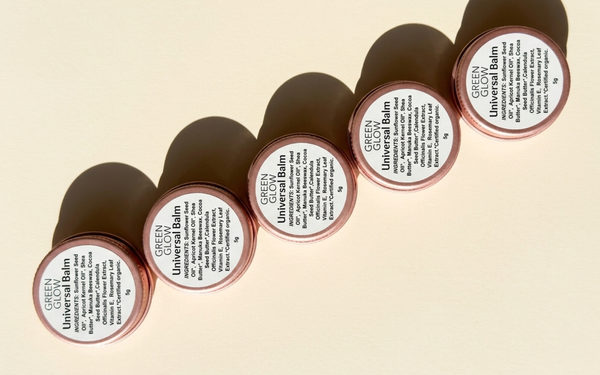
Waterless, and what that choice costs
Abhyanga: what oiling your own skin actually does
Join the community
Slow beauty, in your inbox
Ritual guides, ingredient stories and 15% off your first order, for those who believe the best skincare comes from nature.
We respect your privacy. Unsubscribe at any time.

Let nature show its magic to you. Naturally derived skincare rooted in Ayurveda, handmade in small batches in Melbourne for sensitive, dry and ageing skin.